Will the next production run meet your drawing's requirements? In high volume production machining, part count alone won't answer that. What proves the setup is ready, and does the quoted lead time include shipping? Our standard machining lead time is 10–15 days, excluding shipping, and we inspect the first part of every batch before production starts. The buyer's checklist below covers workholding, tool replacement, inspection evidence, change approvals and release planning. If you're still choosing a production approach, see the low-volume versus mass-production comparison. For the service itself, see how we run a repeat program.
What Is Considered High-Volume Production in CNC Machining?
High volume production is classified by product range, regularity, stability and volume together, according to Fundamentals of Manufacturing Engineering Using Digital Visualization. Part count alone leaves those other attributes unanswered. For a repeat CNC program, the useful question is whether the supplier can hold the agreed requirements across releases.
What quantity do you need over time, and will the same drawing return? The same source defines production volume as the quantity of a product made within a time interval. It describes batch production as a stable product range split into repeating batches. Your annual forecast and expected release pattern belong in the production discussion.
Process stability needs separate evidence. NASA's Measurement Quality Assurance Handbook, Annex 2, assesses performance against specification limits only after the process has been observed in statistical control. Ask what production records support repeatability, alongside the proposed release quantities.
Smaller, recurring batches can sit in low-volume production before a program scales. Once the volume pattern is clear, the next question is whether CNC machining remains the right process for the part.
Is CNC Machining Good for Mass Production?
Yes, CNC machining can suit mass production. Bralla's Design for Manufacturability Handbook describes turning used for quantities from one piece to many millions, with longer runs justifying more automation. Your forecast still needs a process comparison. MIL-HDBK-727 Design Guidance for Producibility compares alternative methods through projected demand, setup requirements and operating effort.
The useful comparison is what each process commits you to before repeat releases begin.
| Process | Tooling Commitment | Design Stability | Machining Requirements |
|---|---|---|---|
| Machining | Bralla's manifold example uses a machined-and-assembled version with low tooling commitment. | A machined pilot version can precede any casting commitment. | The example retains machining and assembly instead of a complex die. |
| Investment casting | Casting is weighed against how much machining it removes. | A design likely to change weighs against investment casting. | Bralla identifies extensive machining as a reason to consider investment casting in high production. |
| Die casting | Bralla's zinc manifold needs sufficient production to amortize its complex die. | The die commits the design earlier than the machined version. | The example establishes no universal replacement rule. |
MIL-HDBK-727 explains that different methods become economical at different volume ranges. Its method supplies no universal CNC-to-casting cutoff, so run the break-even comparison on your own demand and each proposed route.
If CNC remains the selected route, workholding becomes the next decision. Jig and Fixture Design bases workholder selection on part type, operations, parts per run, repeat runs and expected program life.
What Changes When a Part Moves From Prototype to Production?
Repeat production adds workholding chosen for recurring runs, defined tool-wear limits and incoming material checks. The prototype proved the drawing; the production process has to prove it can repeat. Three kinds of evidence matter: the workholder selection rationale, the tool replacement criterion and the material certificate checked at arrival.
Does a Repeat Part Need a Dedicated Fixture?
A repeat part needs a dedicated fixture only when its operations and production pattern justify one, according to Jig and Fixture Design. Compare the options against your release pattern before committing.
| Workholding | Suitable Production Conditions |
|---|---|
| Universal workholding | Chucks and vises serve single-part production with a broad product range, according to Fundamentals of Manufacturing Engineering Using Digital Visualization. |
| Modular workholding | Suits infrequent production and is faster to revise when products change, according to Fundamentals of Tool Design. |
| Dedicated fixtures | Suited to long runs of specialized parts, according to Jig and Fixture Design. |
If your drawing may still change, modular workholding deserves consideration first. Once you know how the supplier holds the part, the next question is when its cutting tools get replaced.
How Is Tool Life Monitored on a Repeat CNC Run?
Tool life is the cutting time before a predetermined wear limit, according to Machinery's Handbook, 31st edition. Close-tolerance finishing requires a smaller wear limit. Ask which criterion applies to your finished features rather than assuming one replacement point for every tool.
The tool-life discussion covers three linked decisions:
- Wear criterion. Machinery's Handbook lists wear, surface roughness and crater depth as possible criteria. The supplier should name the one proposed for your operation.
- Time or use-count setting. FANUC's Series 30i/31i/32i User's Manual describes tool groups with life settings based on time or use count. This is an available controller method, not a confirmed shop practice.
- Replacement trigger. The same manual describes automatic selection of the next tool in the group when life expires. Establish the supplier's actual replacement method before the process is locked.
How Is the Process Locked for Repeat Orders?
A repeat process is locked through document revision control and managed changes, following principles in MIL-PRF-38534L. Review what is approved for your program and how proposed changes get approved.
These review points draw from electronics manufacturing sources. They offer procurement guidance, not mandatory CNC standards or confirmed procedures at our factory.
- Review approved documentation. MIL-PRF-38534L covers design, processing and documentation changes, including cost-reduction and improvement changes, with correct revisions available. Agree which documents define your approved production route.
- Review a production-representative first article. The Printed Circuits Handbook explains that first-article approval assumes the samples represent later production; special handling undermines that evidence. The sample's manufacturing route is part of your review.
- Review proposed process changes. MIL-M-38510J requires advance notification of major changes affecting performance, quality, reliability or interchangeability in its microcircuits context. For CNC procurement, agree those notification responsibilities explicitly.
- Review written deviations. MIL-STD-109C defines a deviation as written authorization before manufacture, limited to specified units or time, without revising the approved configuration documents. A temporary departure is not a permanent revision.
With the production route identified, the inspection discussion can address what evidence each release needs.
What Inspection Plan Does a Repeat Program Need?
A repeat program needs incoming material checks, first-part approval, checks during production and final measurement of critical dimensions. Our quality system is certified to ISO 9001. The plan should show what evidence accompanies each batch before you approve repeat releases.
| Stage | What We Check | Evidence or Release Condition |
|---|---|---|
| Incoming | Every material batch arrives with a certificate, checked again on arrival. | The certificate accompanies the incoming batch. |
| In-process | The first part of every batch receives a first article inspection, then parts are checked at set intervals. | Production starts only after the first part passes. |
| Final | Critical dimensions are measured on a coordinate measuring machine (CMM). | The inspection report ships with the parts. |
First article inspection verifies the setup. MIL-PRF-31032D defines it as examining the first manufactured item to verify correct setup and process alignment. That definition comes from printed circuit board manufacturing; it supports the setup-verification principle without establishing a CNC inspection package.
Sampling alone cannot establish control. MIL-STD-1916 states that sampling inspection neither controls nor improves quality; product design and process control provide that foundation. Agree the sampling scope alongside the in-process checks, then settle inspection timing with the release schedule.
How Do You Schedule Releases From a China Supplier?
Our standard CNC machining lead time is 10–15 days, excluding shipping. A mini order can ship in 7 days. Discuss your annual forecast, stock-cover needs and proposed release dates with us. Freight needs a separate arrangement before you can plan arrival dates.
| Planning Area | Information to Discuss | Supported Basis |
|---|---|---|
| Forecast inputs | Annual demand, expected release pattern and days of stock needed. | Fundamentals of Manufacturing Engineering Using Digital Visualization sizes small and medium batches from annual output and stock-cover days. |
| Production timing | The proposed machining schedule for each release. | Standard lead time of 10–15 days, excluding shipping; a planning reference, not a guaranteed release date. |
| Freight arrangements | Preferred shipping method and required arrival date. | Air freight, sea freight and international express are available, selected to suit customer requirements. |
The batch-sizing method supports the demand discussion; it is not a factory capacity commitment. Request agreement on each proposed release schedule, and request freight timing separately from machining timing. You can start that discussion through our instant quote page.
Which Industries Use Production Machining?
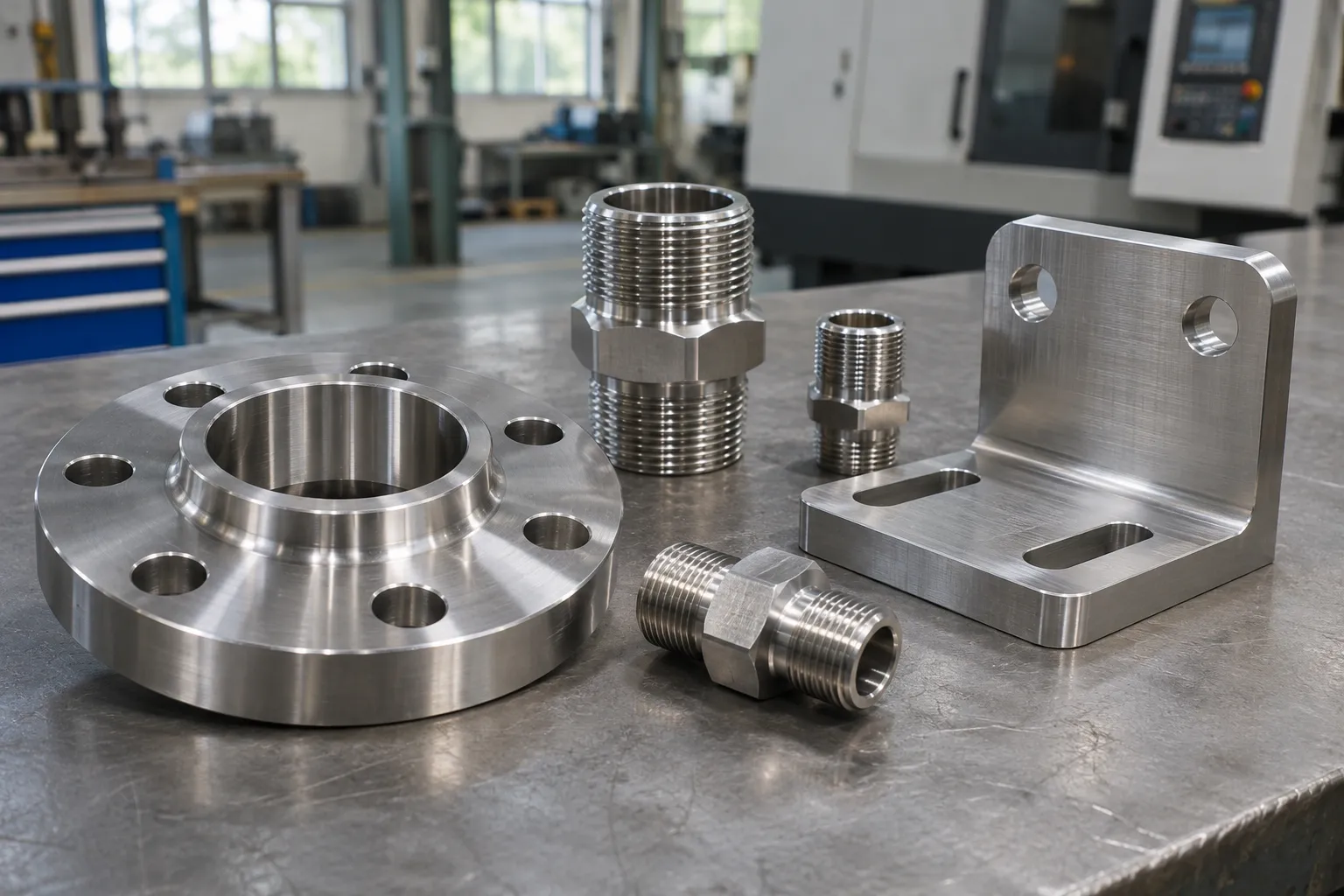
Automotive, aerospace, medical and electronics programs use production machining for repeat custom components, and these are the industries within our machined-components scope. The industry matters less than the drawing. Critical dimensions, tolerances and inspection scope come from your documentation, and they set the inspection plan described above.
A buyer re-sourcing an automotive bracket and an engineer releasing an electronics housing face the same checklist: workholding, tool life, process lock, inspection and releases.
How Do We Run a Repeat CNC Program for You?
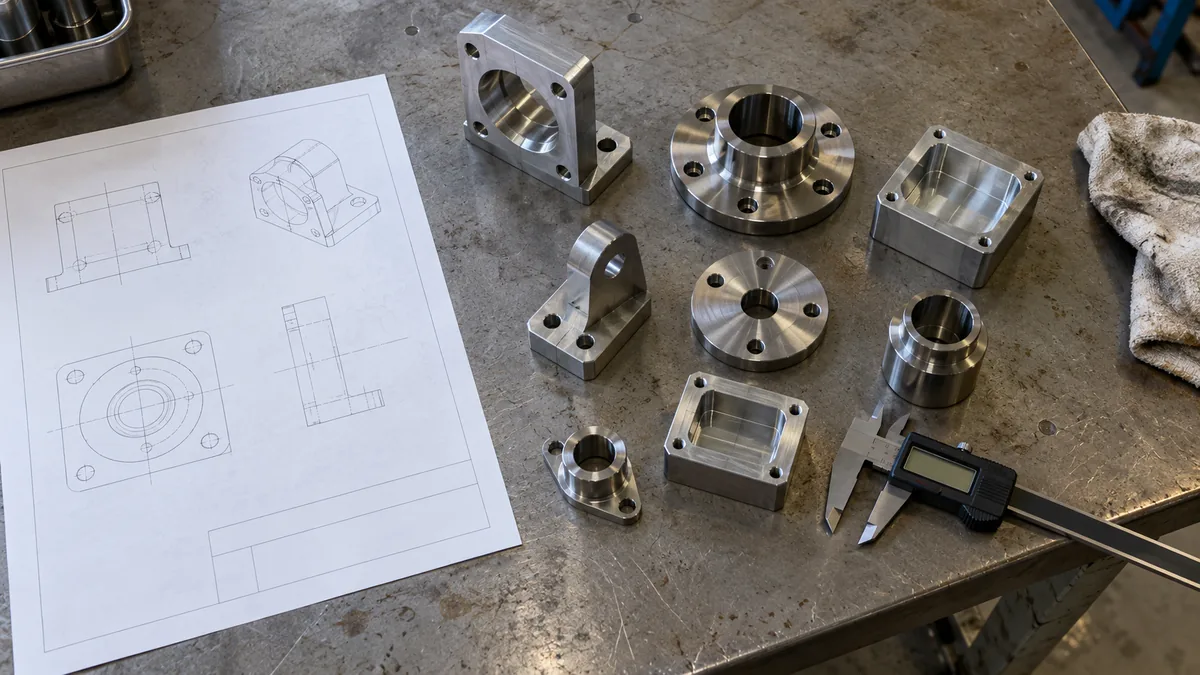
Every project starts with your drawing and an engineering DFM (design for manufacturability) review before machining. That review confirms tolerances: ±0.05 mm standard and ±0.01 mm for precision work, with ISO 2768 as the general-tolerance reference. It also raises the workholding and inspection questions from this guide before they cost you a batch.
Production then runs under the locked process. The first part of every batch gets a first article inspection, production starts only after it passes, and parts are checked at set intervals. Critical dimensions are measured on a CMM, and the inspection report ships with your parts. Standard lead time is 10–15 days, excluding shipping, and a mini order can ship in 7 days.
Releases follow your forecast. Send the drawing, the annual forecast and your required dates, and we will quote the production route with DFM feedback.
Send your drawing and annual forecast for a production quote
Frequently Asked Questions
What is considered high volume production?
Production classifications consider product range, regularity, stability and volume together, according to *Fundamentals of Manufacturing Engineering Using Digital Visualization*. The same source defines production volume as the quantity of a product made within a time interval. For a repeat CNC program, assess recurring releases and evidence of process stability alongside part count; there is no universal numerical cutoff.
Is CNC machining good for mass production?
Yes. Bralla's *Design for Manufacturability Handbook* describes turning used for quantities from one piece to many millions. Process selection still depends on demand and setup commitment: *MIL-HDBK-727* compares alternative methods through projected volume, setup and operating requirements. Compare the proposed routes for your part using your drawing and annual forecast.
What Is Production Machining?
Production machining is the recurring manufacture of components through a controlled, repeating process. *Fundamentals of Manufacturing Engineering Using Digital Visualization* describes batch production as a stable product range split into repeating batches. For a supplier review, it covers workholding, tool replacement criteria, inspection evidence and approval responsibilities for changes between repeat orders.
Is CNC Machining the Same as Production Machining?
No. CNC machining names the cutting method; production machining describes how recurring work is organized. *Fundamentals of Manufacturing Engineering Using Digital Visualization* classifies production by range, regularity, stability and volume. Turning supports runs from one piece to many millions, according to Bralla's *Design for Manufacturability Handbook*. A repeat CNC program combines the method with that production pattern.
Which Industries Use Production Machining?
Automotive, aerospace, medical and electronics programs use production machining for repeat custom components, and these are the industries within our machined-components scope. Whatever the industry, the drawing sets the requirements: critical dimensions, tolerances and inspection scope. We inspect the first part of every batch before production starts, then check parts at set intervals during the run.