Both materials show up on nearly every quote request we get, but they behave very differently under a cutting tool and in the field. Here's how to pick the right one for cost, strength, and corrosion resistance before you release the drawing.
Machinability and Cost: Why Aluminum Cuts Faster and Cheaper
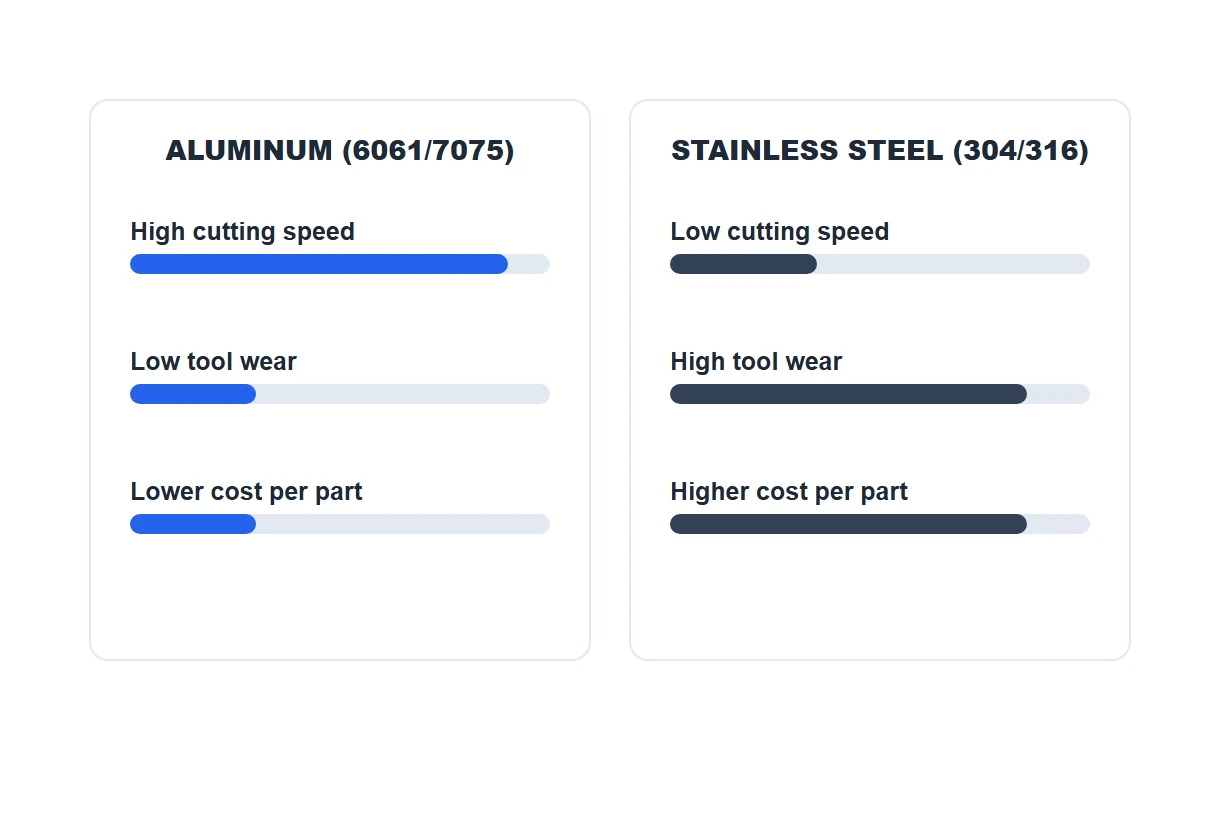
Aluminum alloys like 6061 and 7075 are among the most machinable metals available — they cut at three to five times the speed of stainless, produce clean chips, and run cool, which keeps tool life high and cycle times short. Stainless steel (304, 316) is a different story: it work-hardens under the cutting edge, conducts heat poorly, and demands sharper tooling, lower feeds, and more frequent tool changes to avoid galling and premature wear.
That machinability gap shows up directly in the quote. Stainless typically costs more per kilogram as raw stock, and its slower cutting parameters and higher tooling consumption stretch cycle time on every part. For a straightforward bracket or housing, aluminum will almost always land cheaper per unit — stainless earns its higher price when the application genuinely needs the added strength or corrosion resistance. Our CNC machining service runs both materials daily, so we can quote either side accurately rather than guessing.
Mechanical Properties: Strength-to-Weight vs Raw Strength
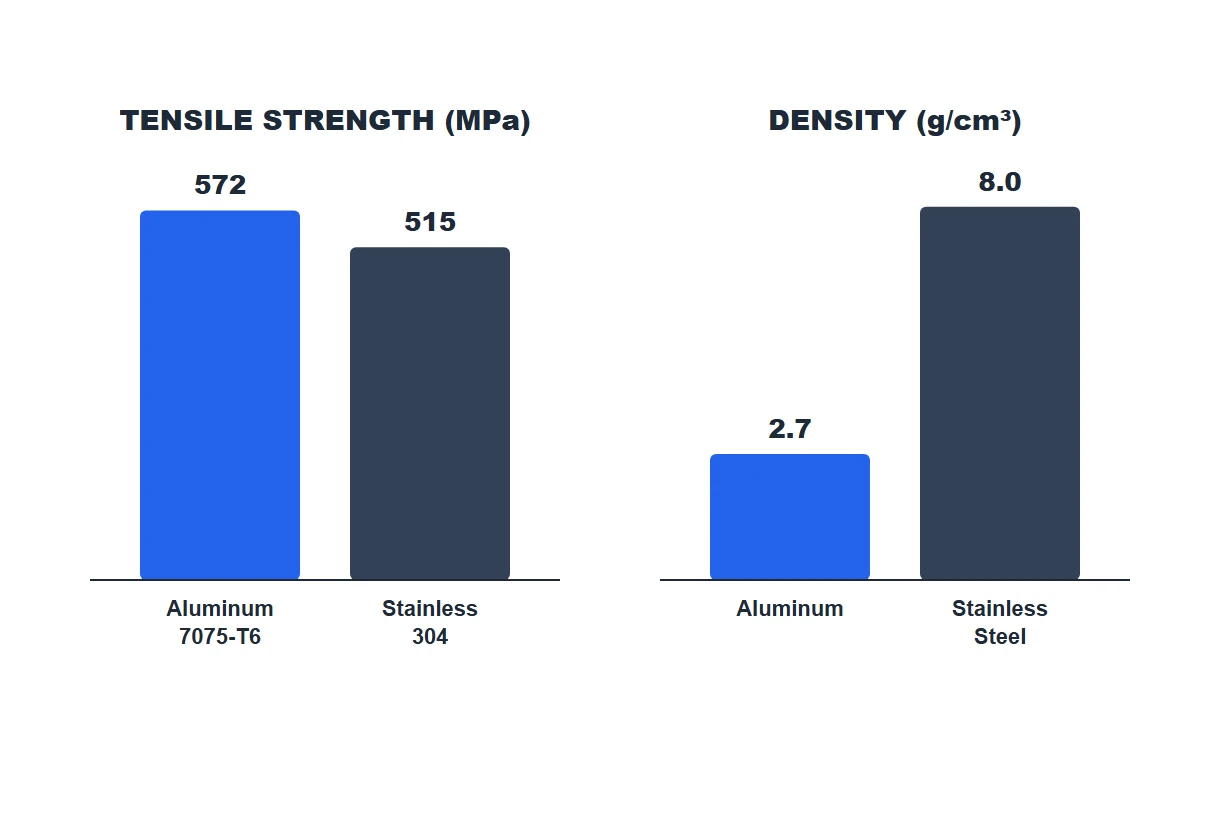
7075 aluminum reaches roughly 572 MPa tensile strength, and even general-purpose 6061 holds around 310 MPa — respectable numbers at less than a third the density of stainless steel (2.7 g/cm³ vs about 8.0 g/cm³). That strength-to-weight ratio is why aluminum dominates drone frames, robotics arms, and aerospace brackets where every gram matters.
Stainless steel wins when the part needs absolute strength, stiffness, or wear resistance rather than lightness. 304 and 316 offer yield strengths in a similar or higher range than aluminum alloys, plus far better resistance to deformation, abrasion, and repeated flexing over the part's service life. For fasteners, shafts, medical instruments, or food-processing hardware, the extra weight is a fair trade for durability.
Corrosion Resistance and Finishing Options
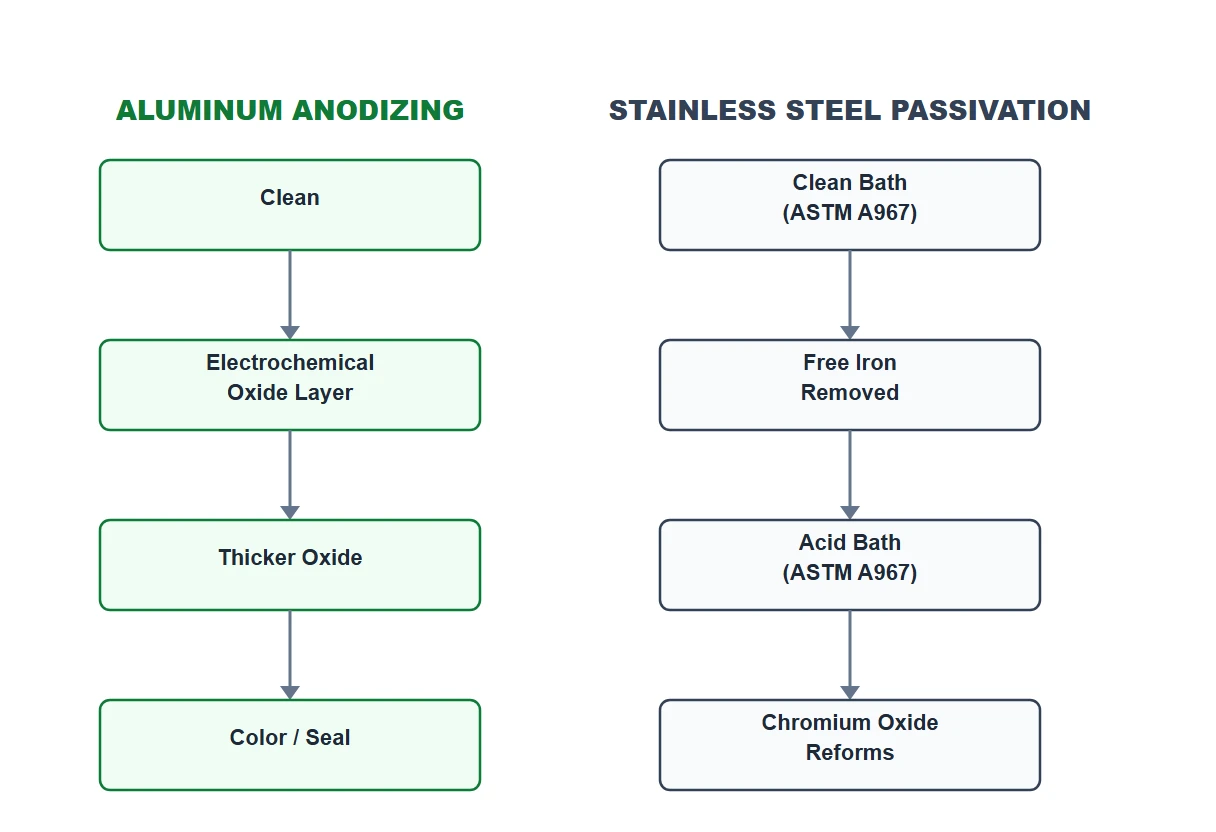
Aluminum forms a thin natural oxide layer that resists everyday corrosion, but for demanding environments most parts get anodized — Type II for color and mild wear resistance, Type III hardcoat for parts that see abrasion or friction. Stainless steel's chromium content gives it corrosion resistance built into the alloy itself, and 316's added molybdenum makes it the go-to choice for marine, medical, and chemical-exposure parts.
Where aluminum gets anodized, stainless gets passivated: an acid bath (per ASTM A967) that strips free iron left behind by machining and lets the chromium oxide layer reform cleanly. Passivation restores corrosion resistance rather than adding a coating, so it won't change dimensions or add hardness the way anodizing can. Knowing which finish your application actually needs avoids paying for a process that doesn't solve the real problem.
Why Machine Your Aluminum or Stainless Steel Part With Us
- 12–24h quote turnaround — send your CAD file and get pricing, lead time, and DFM feedback for either material fast.
- ISO 9001:2015 certified — documented inspection at every stage, whether you're running a single aluminum prototype or a stainless production batch.
- NDA-ready & confidential — your CAD files and part specifications stay protected under NDA from quote through delivery.
- No fixed MOQ — from a single aluminum prototype to a full stainless steel production run, we machine to the quantity you actually need.
Frequently Asked Questions
Is aluminum or stainless steel easier to machine?
Aluminum (6061, 7075) is significantly easier to machine than stainless steel. It cuts at three to five times the speed, generates less heat, and causes far less tool wear because it doesn't work-harden the way austenitic stainless (304, 316) does. Stainless requires slower speeds, sharper tooling, and more frequent tool changes to avoid work hardening and premature edge wear.
Is stainless steel more expensive to machine than aluminum?
Yes, typically. Beyond a higher raw material cost per kilogram, stainless steel's slower cutting speeds and faster tool wear increase cycle time and tooling cost, which raises the per-part machining cost even before material is factored in. For high-volume runs this gap compounds significantly.
Which resists corrosion better, aluminum or stainless steel?
Stainless steel, particularly 316, offers superior corrosion resistance out of the box thanks to its chromium-nickel-molybdenum composition, especially in chloride-rich or marine environments. Aluminum resists corrosion via a natural oxide layer, but it's thinner and less durable, and can pit or corrode under harsher conditions unless anodized.
Can aluminum be anodized the same way stainless steel is passivated?
No, they're different processes with different goals. Anodizing electrochemically thickens aluminum's oxide layer, adding wear resistance, color options, and improved corrosion protection. Passivation removes free iron from a stainless steel surface with an acid bath so the natural chromium oxide layer can reform — it doesn't add thickness or hardness the way anodizing does.