
CNC Turning in China for Shafts, Bushings, and Threaded Parts
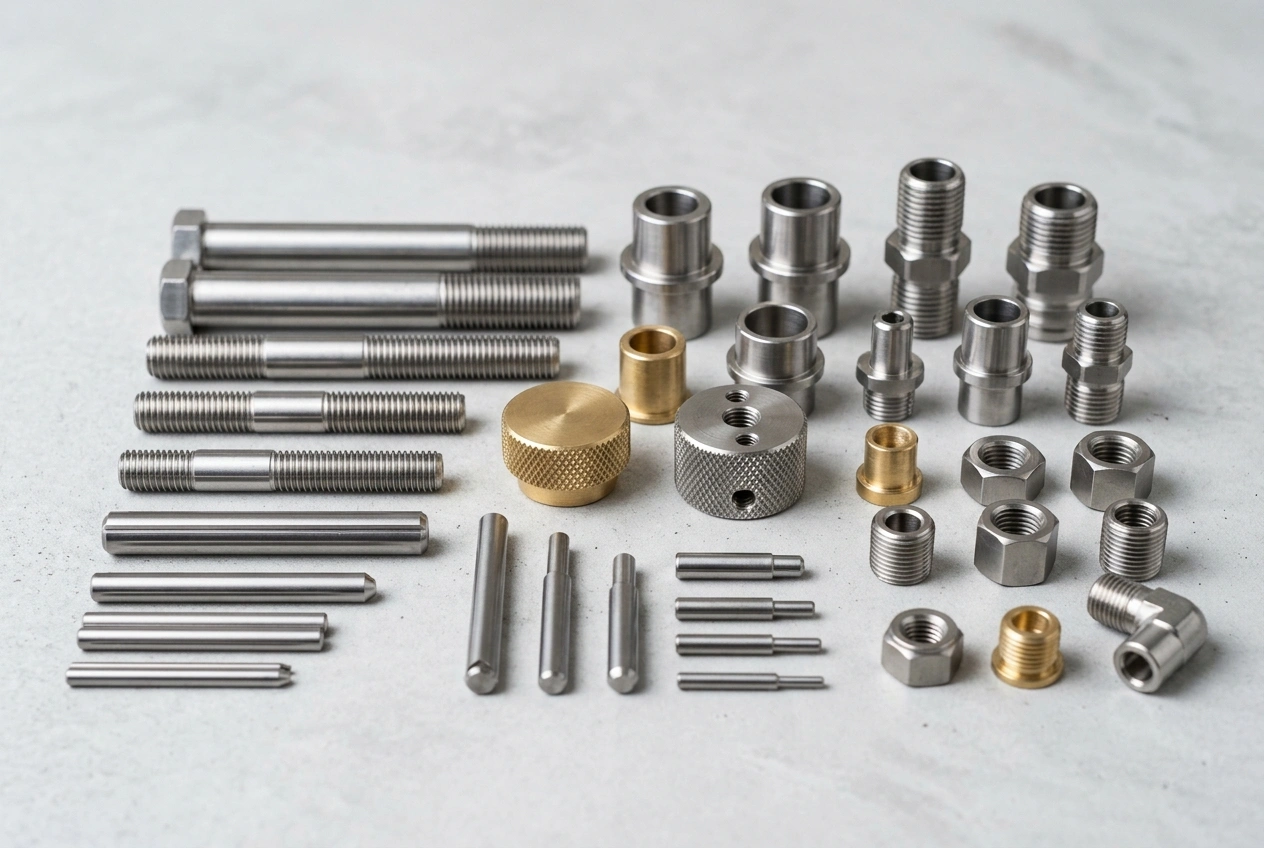
Bar stock and blanks become shipped lots through CNC turning service China programs for shafts, pins, bushings, and threaded hardware. Work is ISO 9001:2015 controlled; quotes cover insert strategy, cycle risk, and inspection before you release a PO.
- High-speed lathe services for concentric diameters, bores & shoulders
- External/internal threads, grooves & cut-off aligned to your print
- Custom turned shafts & bushings in metals and engineering plastics
- DFM on stick-out, threads & tolerance stacks before cutting
Turning Round Parts That Stay on Axis
Precision lathe work is how you keep diameters, bores, and threads concentric and repeatable across a lot. The blank spins while a single-point tool cuts diameters, faces, and threads in sequence—ideal for custom turned parts such as spacers, valve trim, drive adapters, and long shafts where runout and thread fit drive assembly.
This page stays on round-component work. Prismatic enclosures and pockets belong on CNC milling. For how every service fits together, start from the CNC machining overview.
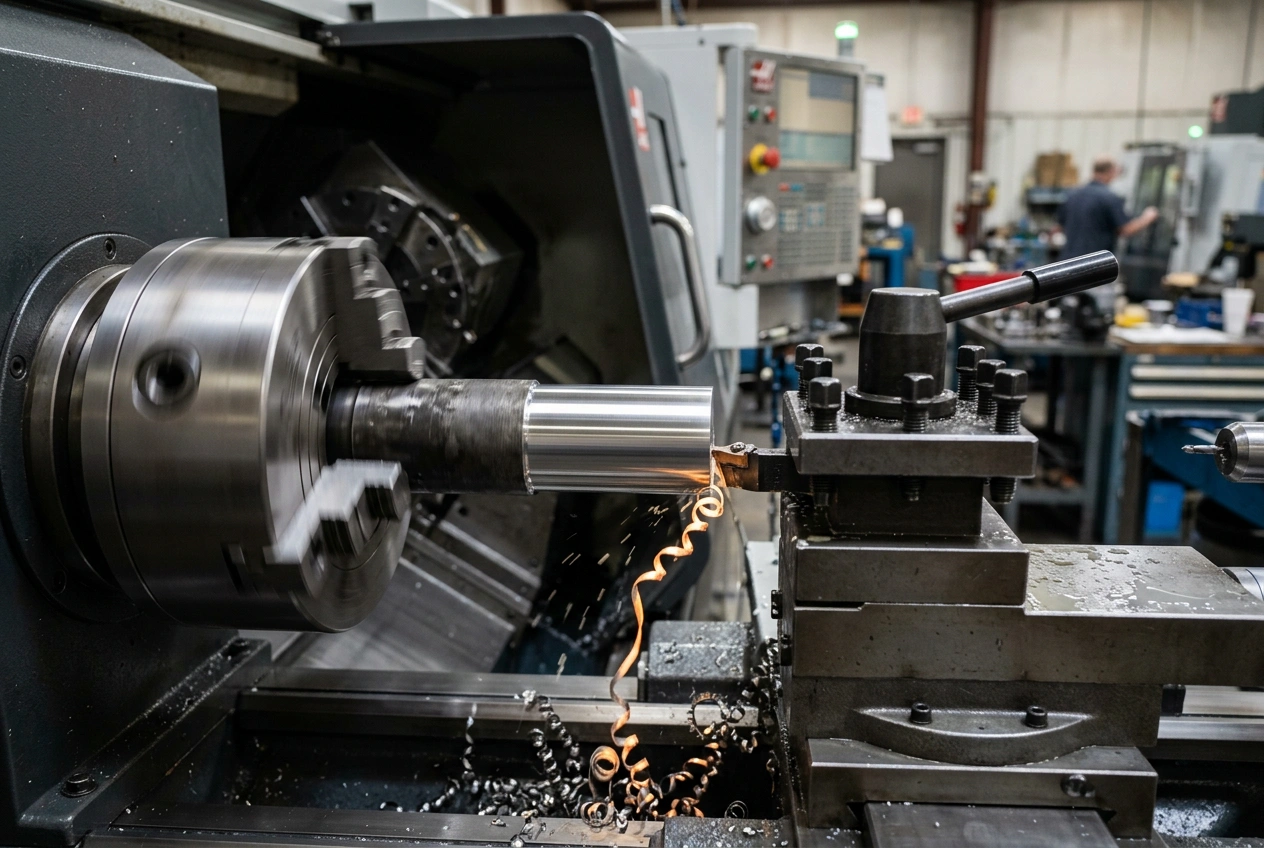
Lathe Operations We Run Every Day
Facing machines a flat perpendicular to the spindle so length stacks and shoulder positions have a clean datum.
OD turning reduces outside diameter along the bar or blank; boring opens or finishes inside diameters for press fits, bearings, or inserts.
Grooving cuts retaining grooves and relief; cut-off separates finished pieces from bar stock when the geometry supports it.
Threading—metric, UN, or per your table—is programmed to pitch and class; we plan gauge strategy when mating parts are tolerance-sensitive.
Need cross-holes or flats? We coordinate secondary work or route combined programs through our machining team so you are not managing conflicting vendors.
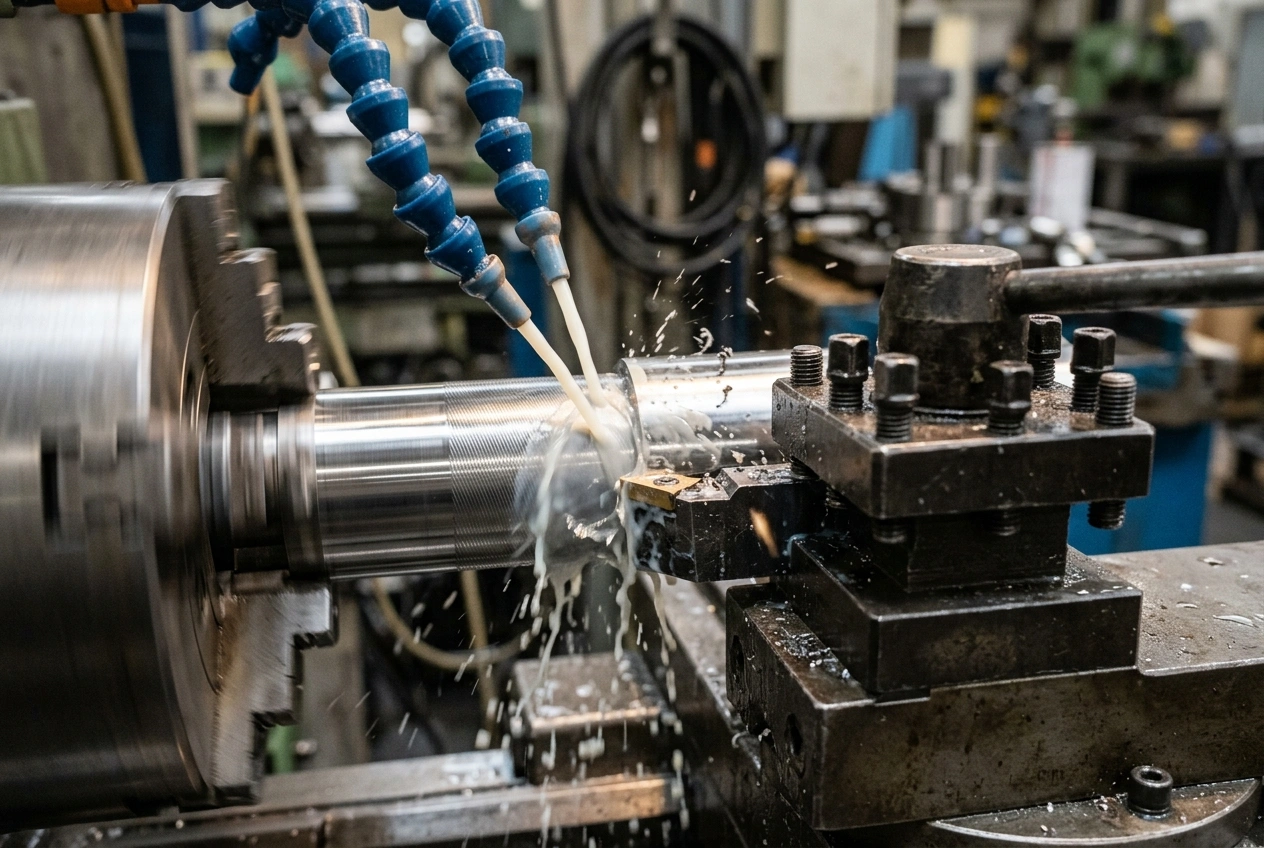
From Program Release to Shipment
RFQ review. We read models and drawings for L/D ratio, interrupted cuts, thread class, and surface notes that affect insert choice and cycle time.
Setup. Chuck, collet, or soft-jaw strategies are picked to minimize runout on the features you measure in incoming QC.
Programming. Roughing removes stock efficiently; finishing passes protect size and surface on critical diameters and bores.
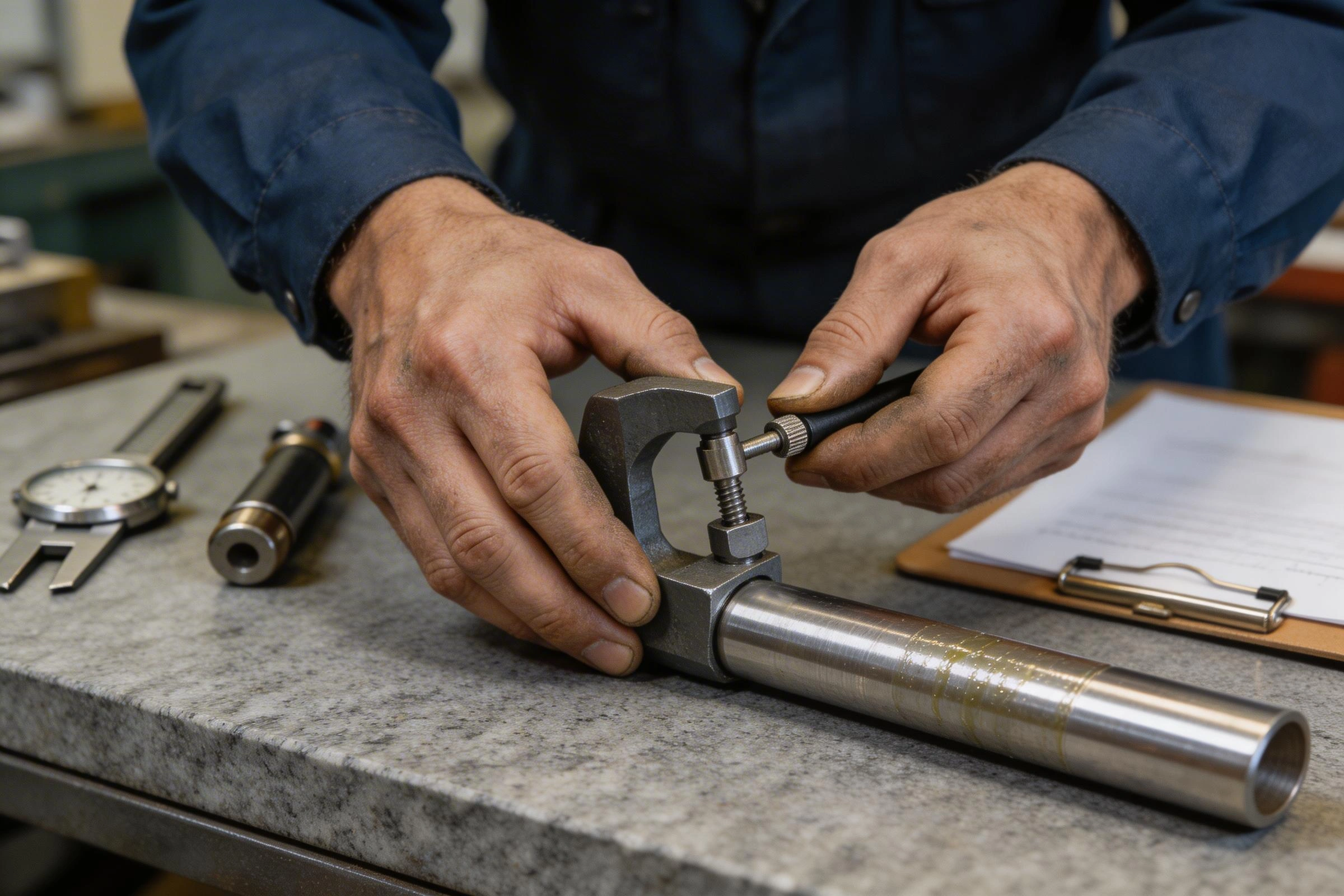
Release. Micrometers, bore gauges, thread gauges, and CMM sampling are applied per plan—so what ships matches what procurement approved.
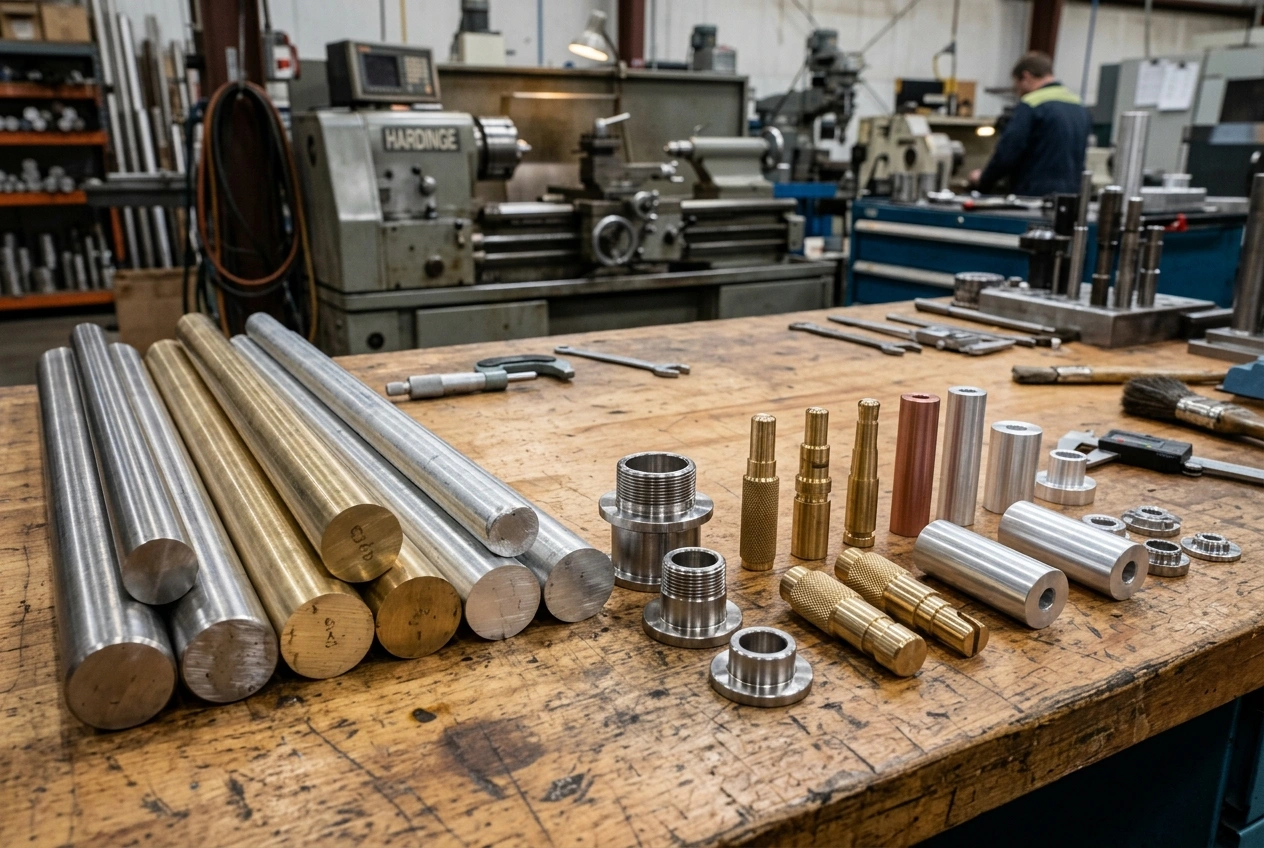
Metals and Plastics We Turn Regularly
Turning rewards consistent chip formation. We match grade to insert geometry, coolant, and expected surface so you do not fight galling on stainless or melt-out on plastic.
- Aluminum: 6061-T6, 7075, 5052—lightweight shafts, housings, and thermal paths.
- Stainless & steel: 304, 316L, 17-4PH, carbon and alloy steels—strength, wear, and corrosion per your spec.
- Brass & copper: electrical and fluid fittings where conductivity or sealability counts.
- Titanium: controlled passes for aerospace-style or medical-style hardware when your drawing defines it.
- Plastics: acetal (POM), nylon, PEEK—scheduled to limit chatter and heat at the cut.
Tell us about plating, anodizing, or heat treatment after machining—we can leave stock or adjust finish passes accordingly.
Where Turned Parts Usually Land
Typical high-speed lathe demand shows up in fluid power fittings, actuator rods, pump and valve internals, automation rollers, test-stand adapters, and electronics hardware that needs a precision bore or shoulder. We stay within the certifications we publish—ISO 9001:2015—and document what you need for incoming inspection, not industry labels we cannot support on paper.
Whether you are validating a single prototype or scheduling recurring releases, the control plan is agreed before chips fly.
Finishing Threads and Surfaces Before Ship
Turned surfaces often feed straight into plating, anodizing, passivation, or coating. We leave the right cosmetic stock and deburr strategy so secondary houses see consistent parts.
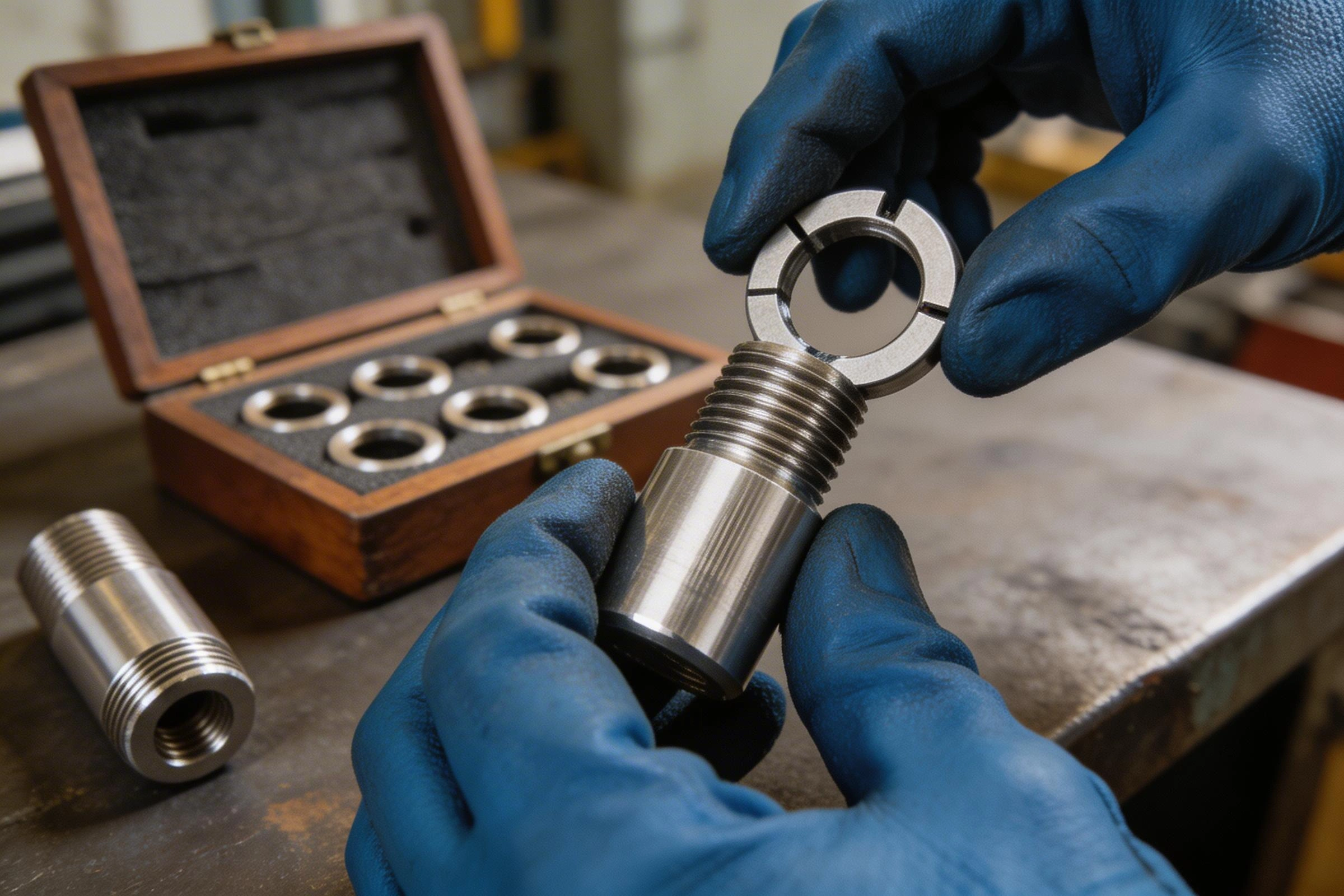
Threaded features get gauge or sample-bolt checks when your torque or seal stack is tight. Runout-sensitive journals can be spot-checked on appropriate equipment so rotating assemblies behave in test.
Certificates, FAIs, and inspection reports are issued to the level quoted—no surprise scope creep at shipment.
Straight Talk on Lathe Work
Repeat orders come when diameters match the print and the quote already explained what could go wrong.
Runout-Controlled Setups
Holding strategy matched to length, diameter, and where you measure first article.
Thread Strategy, Not Guesswork
Pitch, class, and relief planned with gauging when your assembly cannot tolerate slop.
Quotes You Can Defend
Lead time, inspection scope, and material risk spelled out for procurement sign-off.
Export Logistics
Packing and paperwork for buyers in North America, Europe, and Australia.
Questions About CNC Turning
What is CNC turning used for in OEM manufacturing?
CNC turning is used to make predominantly rotational geometry: outside and inside diameters, shoulders, grooves, bores, and threads on parts held in a chuck or collet while the workpiece rotates. Typical buys include shafts, pins, sleeves, bushings, fittings, and spacers. When the design is mostly prismatic flats and pockets, milling is often primary; many assemblies combine turned and milled features.
CNC turning vs CNC milling—which process should I specify?
Specify turning when the critical features are concentric around an axis—diameters, bores, threads, and smooth cylindrical surfaces. Specify milling when you need pockets, ribs, bosses, or multi-sided prismatic work with the blank largely fixed. If your print mixes both, we sequence operations so tolerances and cost stay under control.
What standard lathe operations do you support?
We support facing, straight OD turning, boring and ID finishing, grooving, profiling, threading (external and internal), chamfers, and cut-off from bar when the design allows. Operations are combined in one program where possible so length, diameter, and thread relationships stay aligned.
What drives CNC turning cost and lead time?
Cost and schedule depend on material machinability, length-to-diameter ratio, thread complexity, tolerance bands, inspection level, and lot size. Slender parts and tight threads usually need more conservative passes and more metrology. We quote all of that explicitly so the price matches the risk, not a generic hourly rate alone.
Which metals and plastics can you turn?
We turn aluminum grades such as 6061 and 7075, stainless including 304 and 316L, alloy and carbon steels, brass and copper alloys, titanium, and engineering plastics such as acetal, nylon, and PEEK where lathe stability allows. Grade choice affects inserts, speeds, and coolant—so we align material to your environment and any plating or heat treatment downstream.
What tolerances and thread fit can you hold?
Achievable tolerances depend on stick-out, interrupted cuts, and material. Diameter and length features are held to the bands on your drawing; threads are checked with gauges or functional samples when assembly risk is high. We document first-article or in-process checks to match your incoming inspection plan.
What files should I upload for a CNC turning quote?
Send STEP, STP, IGES, or IGS solids when possible. Add PDF or DWG drawings for threads, GD&T, surface finish, and notes not fully modeled. For long shafts, a section view with stack-up dimensions reduces ambiguity and speeds programming.
How fast can you deliver turned prototypes or production lots?
First-off turned parts often ship within a few working days once material, inserts, and gauging are aligned. Production timing scales with quantity, thread scope, and finishing. You get a confirmed window during quoting—not a guess after the order is placed.
Request a CNC turning quote
Upload drawings for precision lathe work on shafts, pins, bushings, and threaded parts — lead time, tooling, and inspection scoped in writing.
Why buyers choose us
- 12–24h quote turnaroundPricing, lead time, and DFM feedback — fast.
- NDA-ready & confidentialYour CAD files and IP stay protected.
- ISO 9001:2015 certifiedDocumented inspection at every stage.
- No fixed MOQFrom single prototypes to full production runs.