
Brass CNC Machining in China for Fittings, Connectors, and Turned Hardware
We run custom brass CNC machining China programs for OEMs that need precision turning for pins, bushings, and brass fittings, plus milling when the part needs flats, pockets, or manifolds. C36000 and C26000 cover many electrical and fluid-hardware jobs—high conductivity metal parts when your print defines electrical or thermal paths. Work follows ISO 9001:2015; each quote ties alloy, tolerances, and finishing to one scope.
- Turn-first programs for brass and copper-alloy fittings per your BOM
- Milling and holemaking when brackets, enclosures, or manifolds share the same lot
- Finishing coordination—polish, plate, blast—aligned with your surface-finishing scope
- Inspection scoped to the dimensions you release to incoming QC
Brass CNC Machining China: Conductivity, Threads, and Fittings
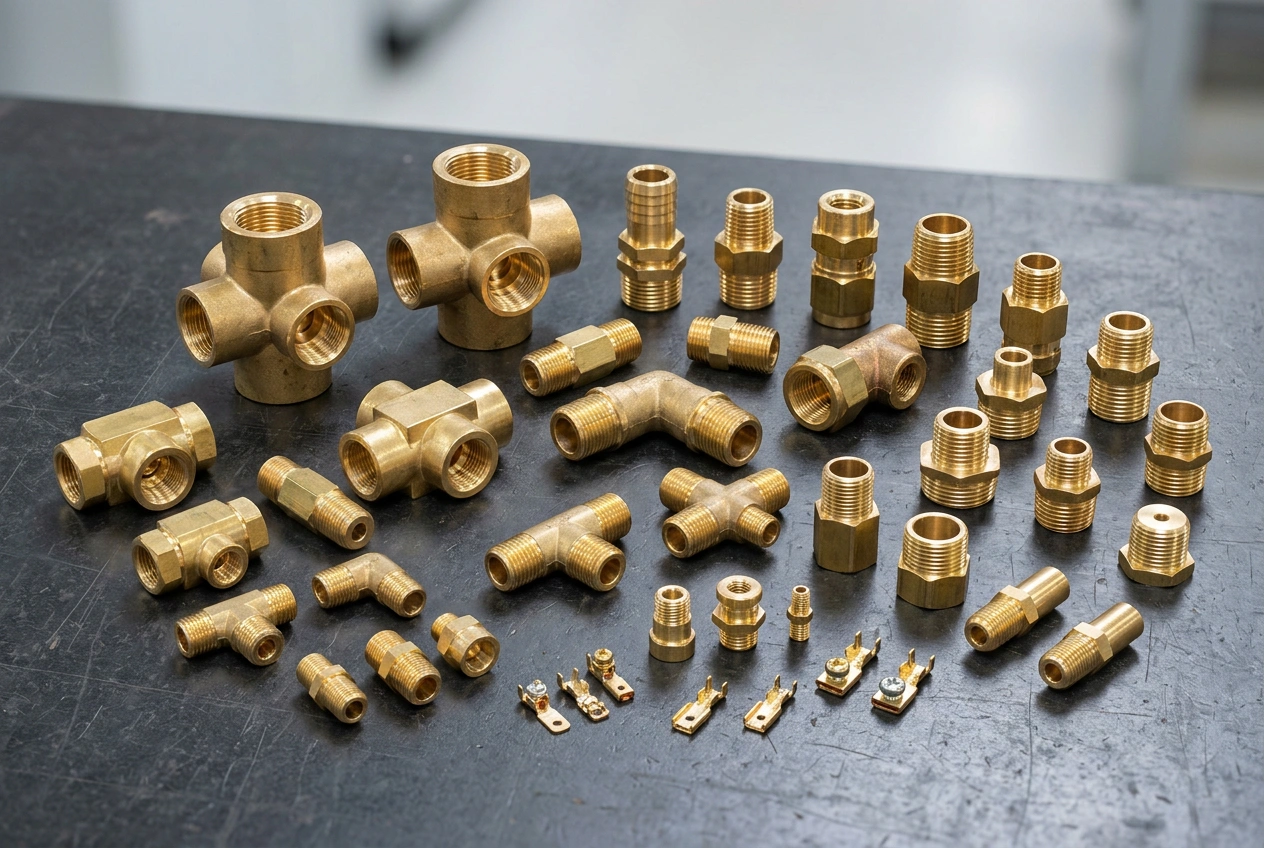
Custom brass CNC machining is a strong fit when your BOM lists copper, bronze, or brass fittings and related hardware: good machinability, useful conductivity for connectors, and threads that assemble predictably. Buyers comparing shops in China usually weigh electrical or thermal paths, seal surfaces, and how the alloy behaves indoors or in mild outdoor service.
Precision turning is often the first choice for symmetric parts—fittings, plugs, standoffs, and valve-style bodies. When you need pockets or faces off the spindle axis, we add milling or coordinate programs through the CNC machining team so datums stay coherent. For corrosion-first jobs, see stainless steel machining; for lightweight housings, aluminum CNC machining—we quote the material your drawing specifies.
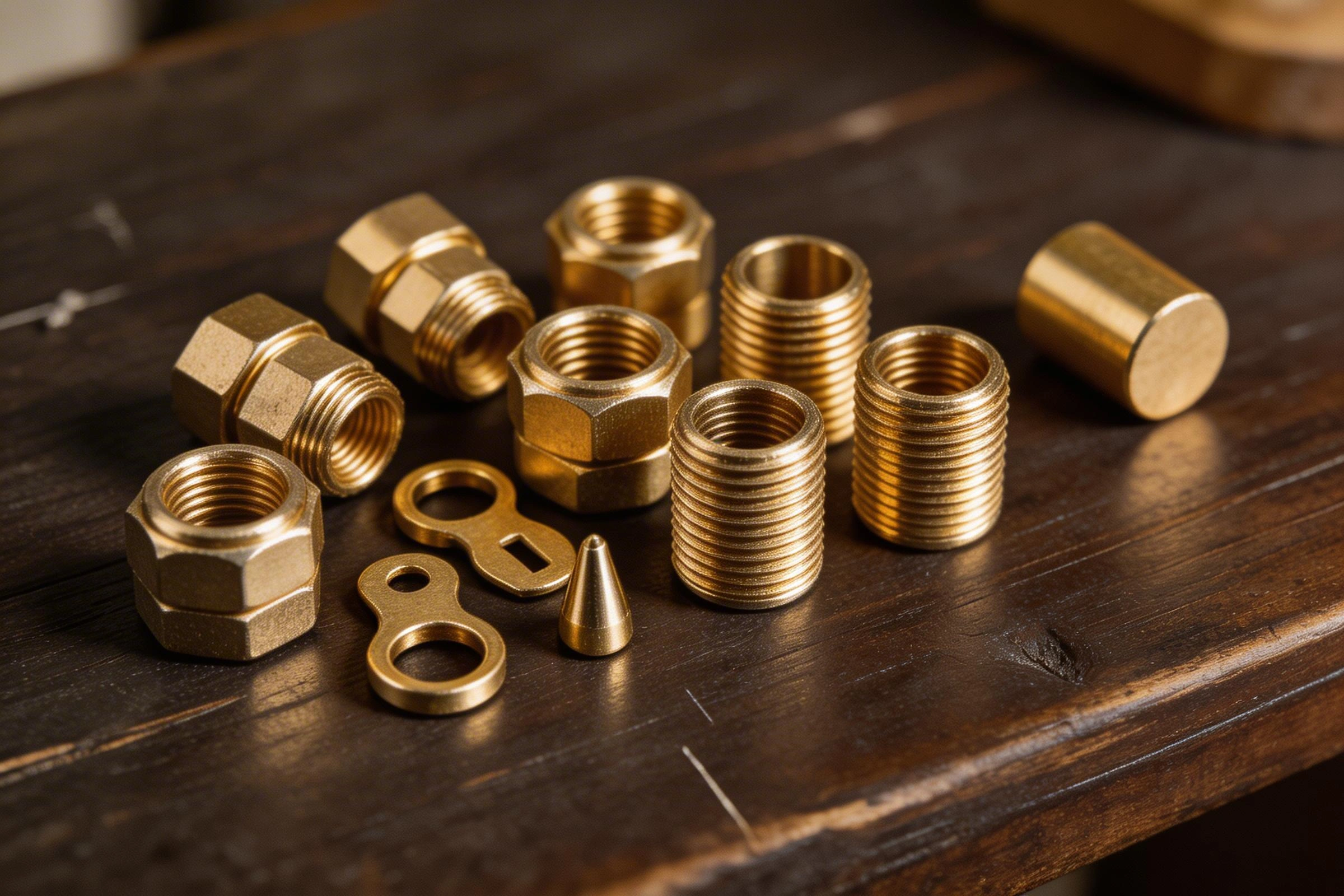
C36000 and C26000: Brass Grades We Machine From Your BOM
We regularly machine C36000 (free-machining brass) and C26000 (cartridge brass) under common North American and international callouts—other copper alloys when your specification lists them. Values below are typical discussion bands; confirm critical properties on mill certifications.
| Grade (typical) | Approx. tensile (MPa) | Typical use |
|---|---|---|
| C36000 | ~338–469 | Free-machining bar and rod; fasteners, inserts, turned fittings, hardware with fine detail. |
| C26000 | ~300–500 | Cartridge / yellow brass; formed and machined electrical and general hardware. |
Programs that need purely rotational geometry often stay on the lathe; mixed features may combine CNC turning with secondary milling or 5-axis when it truly reduces setups.
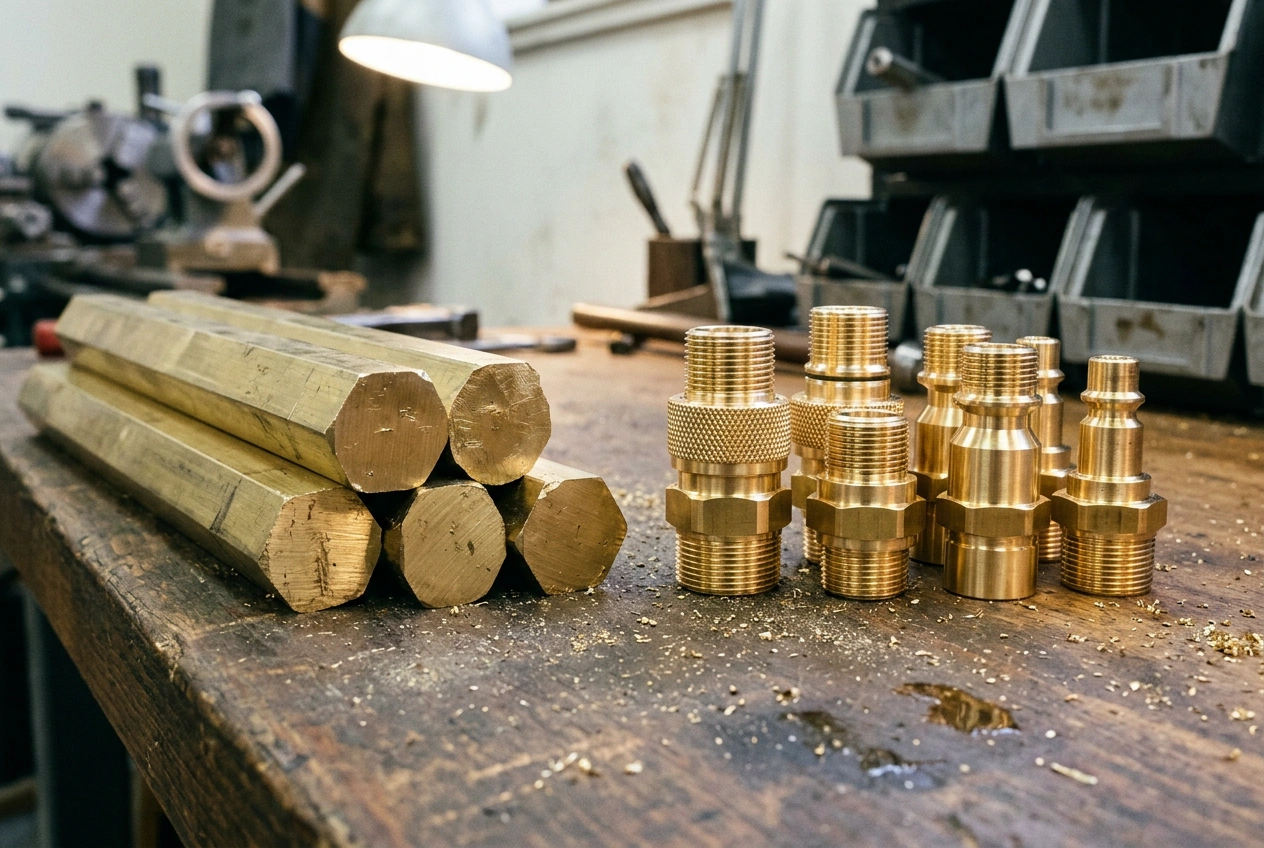
Chip Control, Tool Life, and Surface Finish
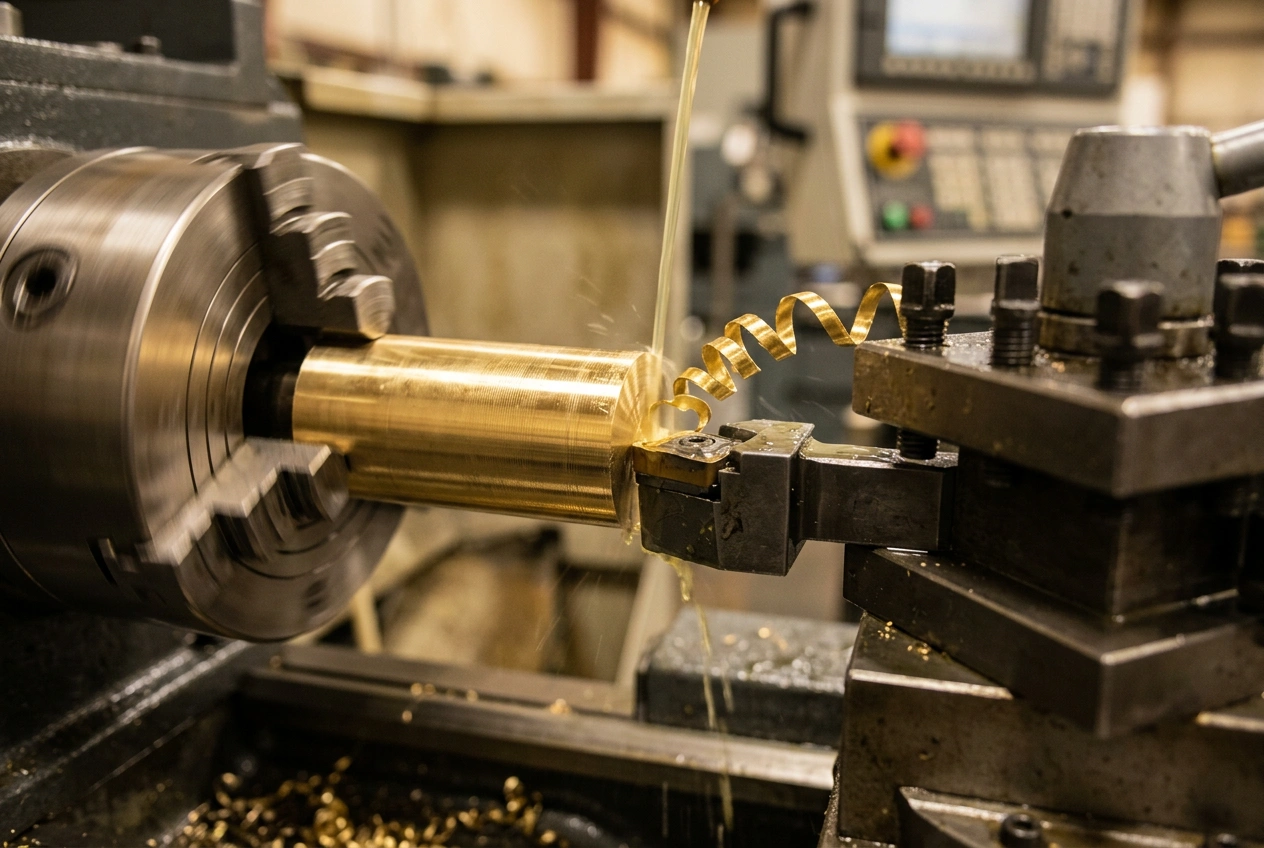
Brass usually allows productive feeds on appropriate tooling, but long stringy chips can wrap spindles or mar soft surfaces. We combine chip-breaking strategies, coolant discipline (where your finish spec allows), and tool geometry suited to copper alloys so lots stay predictable.
Thin-wall fittings and deep bores need realistic tolerance stacks—brass moves heat quickly but can still spring during aggressive light cuts. We quote what the geometry allows, not a generic catalog band.
ISO 9001:2015 and Evidence You Can File
Production runs under documented travelers, calibrated gauging, and inspection plans matched to your drawing. First-article and in-process checks scale with risk—thread gauges for class-sensitive mates, CMM or manual layouts when dimensions are tight.
Material certifications are available when specified so your incoming inspection records match ours.
Brass Finishing: Polish, Plate, and Protect
Brass is often chosen for appearance as well as function. Mechanical polish or blast can unify tool marks; nickel, chrome, or tin-family plating can change corrosion behavior and appearance. Some assemblies need anti-tarnish lacquer. Chemistry and thickness are spec-driven—we coordinate with finishing partners when your PO includes those operations.
Note: True anodizing applies to aluminum-family alloys. Brass uses plating, chemical brightening, or similar processes per your specification—not aluminum anodize.
See surface finishing for the full post-process menu and how it ties to the CNC machining overview.
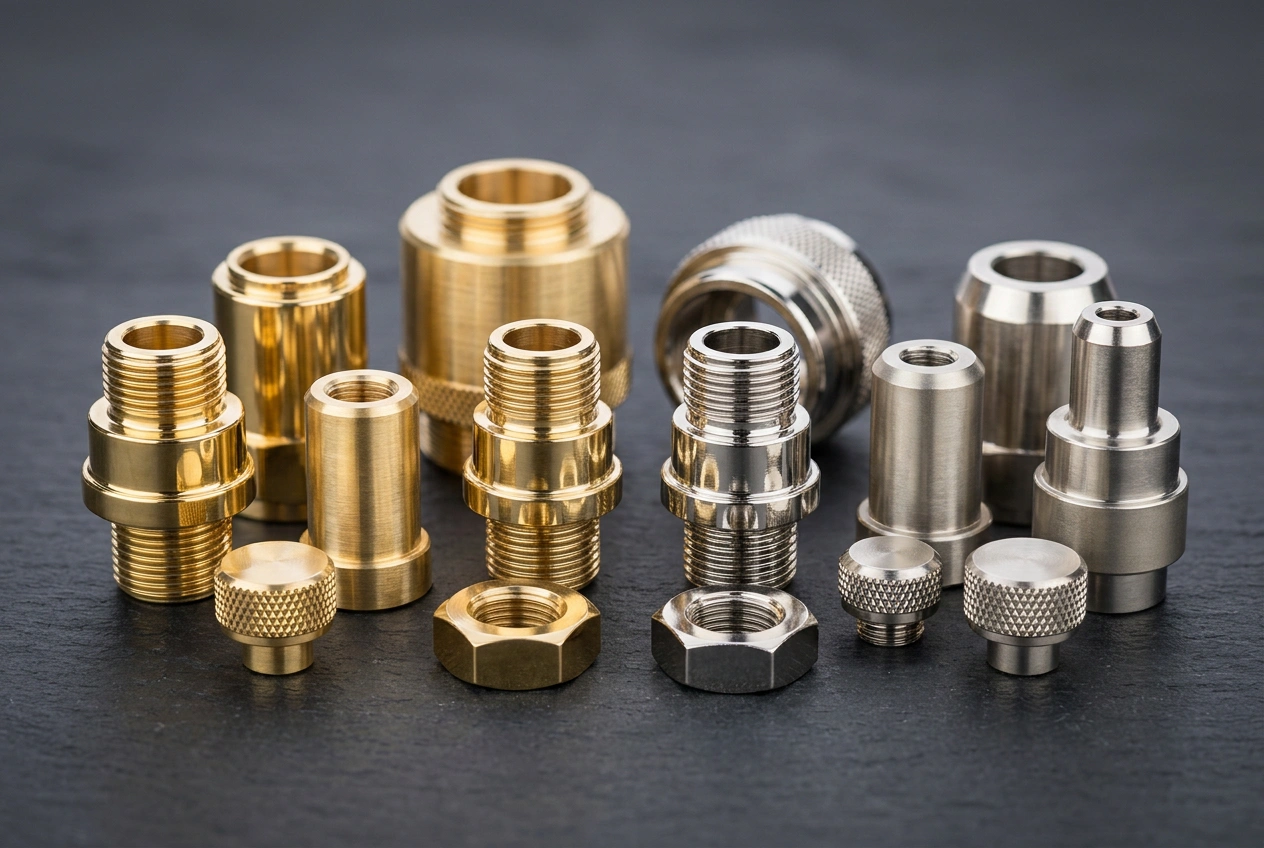
Where Machined Brass Parts Land
Electrical hardware, fluid and pneumatic fittings, instrumentation bodies, decorative consumer assemblies, and general OEM brackets when conductivity or machinability wins. We stay within certifications we publish—primarily ISO 9001:2015—and document what you need for your industry’s evidence rules.
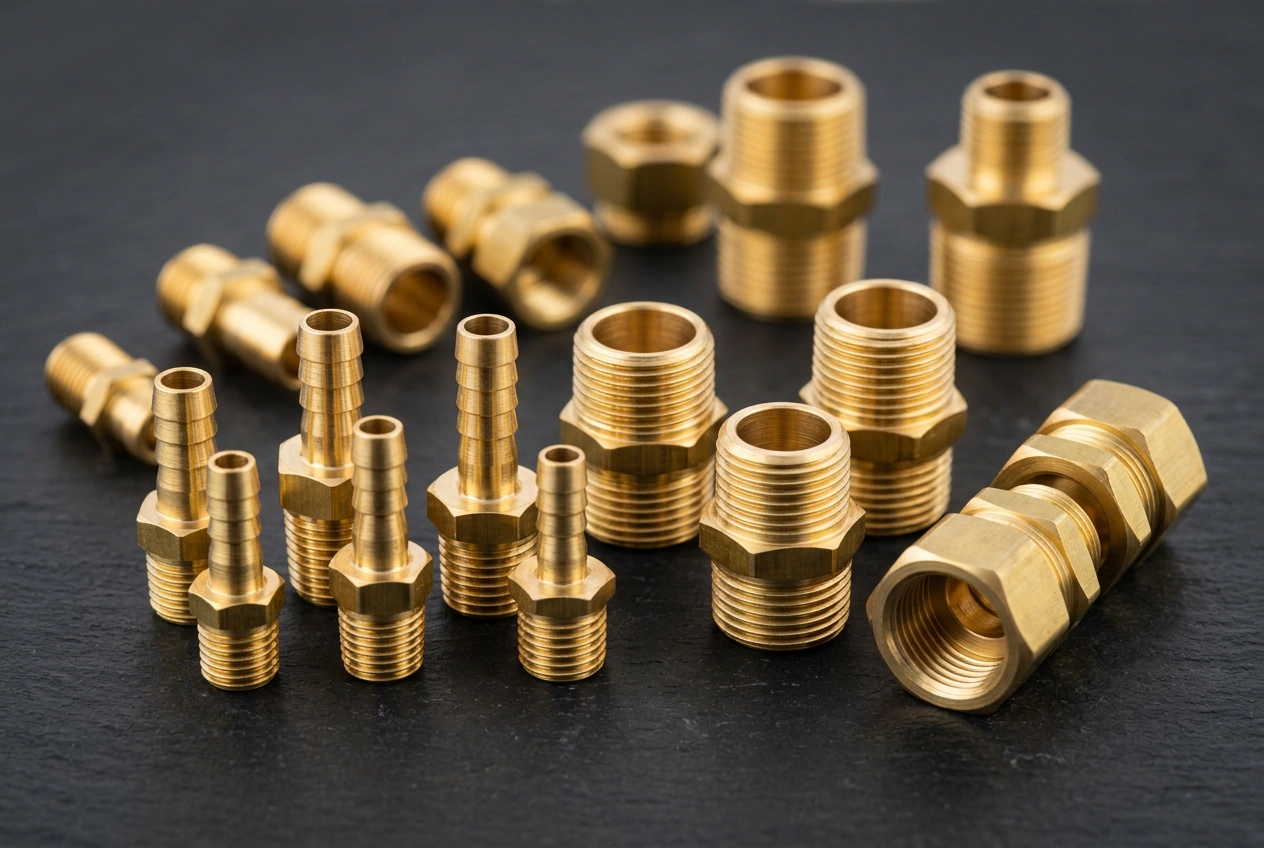
Brass Programs Built Around the Print
Solid brass work means predictable chips, stable dimensions, and quotes that already spell out risk before metal is cut.
Turn-Heavy Expertise
Collet and chuck strategies aligned to length-to-diameter and thread risk.
Conductivity-Aware Planning
Processes that respect plating prep and electrical faces you measure on receipt.
Quotes Procurement Can Defend
Alloy, tolerance, finishing, and inspection spelled out before metal is cut.
Export-Ready Delivery
Packing and documentation for North America, Europe, and Australia.
Questions About Brass CNC Machining
Why choose custom brass CNC machining for OEM parts?
Brass is a copper-zinc alloy family with strong machinability on common grades, useful corrosion resistance in many indoor and mild environments, and good electrical and thermal conductivity for connectors and hardware. CNC machining keeps threads, seal faces, and prismatic features on one component under drawing control—ideal when you need precision turning for fittings and repeatable lots.
C36000 vs C26000—which brass should I specify?
C36000 (free-machining brass) is a default for productive turning, detailed screw-machine-style features, and many brass fittings. C26000 (cartridge brass) is common where ductility, forming, and electrical performance matter. We align grade to conductivity, regulatory limits on lead, and your finishing plan.
Can you machine bronze or copper parts, or only brass?
This page focuses on brass (copper-zinc). Bronzes and coppers are different alloy families with their own sourcing and machining behavior. If your BOM lists a bronze or a copper grade instead of brass, include the full designation at RFQ so we can confirm tooling, stock, and inspection.
Do you support lead-free or RoHS-sensitive brass?
Leaded free-machining grades are common in industrial hardware; some applications restrict lead in potable water or consumer goods. State your regulatory scope when you request a quote—we can discuss lead-free or reduced-lead options when your specification requires them, subject to availability and machinability trade-offs.
What tolerances can you hold on machined brass?
Tolerances follow feature type, part stiffness, and how dimensions chain across setups—not the alloy name alone. Thin walls, deep bores, and interrupted cuts behave differently from simple turned diameters. Call out critical dimensions and datums so inspection matches how you release parts.
What finishes work after brass CNC machining?
Typical options include mechanical polish, vibratory or bead blast for appearance, and decorative or protective plating such as nickel or chrome when specified. Natural brass tarnishes over time; lacquer or plating changes look and upkeep. We coordinate with finishing partners when your PO includes those steps; see the surface finishing page on this site for the full menu.
What should I upload for a brass machining quote?
Provide STEP, STP, IGES, or X_T solids plus PDF or DWG drawings for threads, GD&T, and notes not fully captured in the model. Include alloy (e.g. C36000, C26000), quantity, conductivity or plating requirements, and any material certification needs so the quote matches production.
How does brass CNC cost compare to aluminum or steel?
Brass raw material is often more expensive per kilogram than many aluminums, but high machinability can lower cycle time and tool wear on suitable geometries. Total piece price depends on complexity, tolerance bands, lot size, and finishing—we quote the full scope, not material cost in isolation.
How fast can you deliver brass prototypes or production?
Delivery depends on material availability, programming, finishing scope, and inspection—not the word “brass” by itself. After scope is fixed, you get a confirmed window in the quote rather than an open-ended promise after the PO is placed.
Request a quote on brass CNC parts
Upload CAD and drawings for C36000, C26000, or another specified alloy. We return lead time, finishing options, and inspection scope in writing.
Why buyers choose us
- 12–24h quote turnaroundPricing, lead time, and DFM feedback — fast.
- NDA-ready & confidentialYour CAD files and IP stay protected.
- ISO 9001:2015 certifiedDocumented inspection at every stage.
- No fixed MOQFrom single prototypes to full production runs.