
Large CNC Machining in China for Oversized Industrial Components
Our large CNC machining China capability supports oversized parts that need reliable datum control, not just bigger stock. We run heavy duty milling for frames, bases, and structural pieces where machine reach, setup stability, and inspection planning determine final quality.
- Heavy-duty milling for big industrial components and frameworks
- Large-format fabrication planning with staged setup strategy
- Datum continuity controls across multi-orientation machining
- Inspection workflows aligned to critical feature relationships
Large-Part Machining Is a Datum-Control Problem First
Oversized components challenge process stability: long spans, heavier workholding loads, and feature chains that cross multiple setups. For these jobs, precision comes from planning fixture logic, roughing sequence, and reference strategy before cutting starts.
When prints include broad flatness zones, long hole patterns, or large mating faces, we treat setup transitions and inspection checkpoints as part of machining strategy, not afterthoughts.
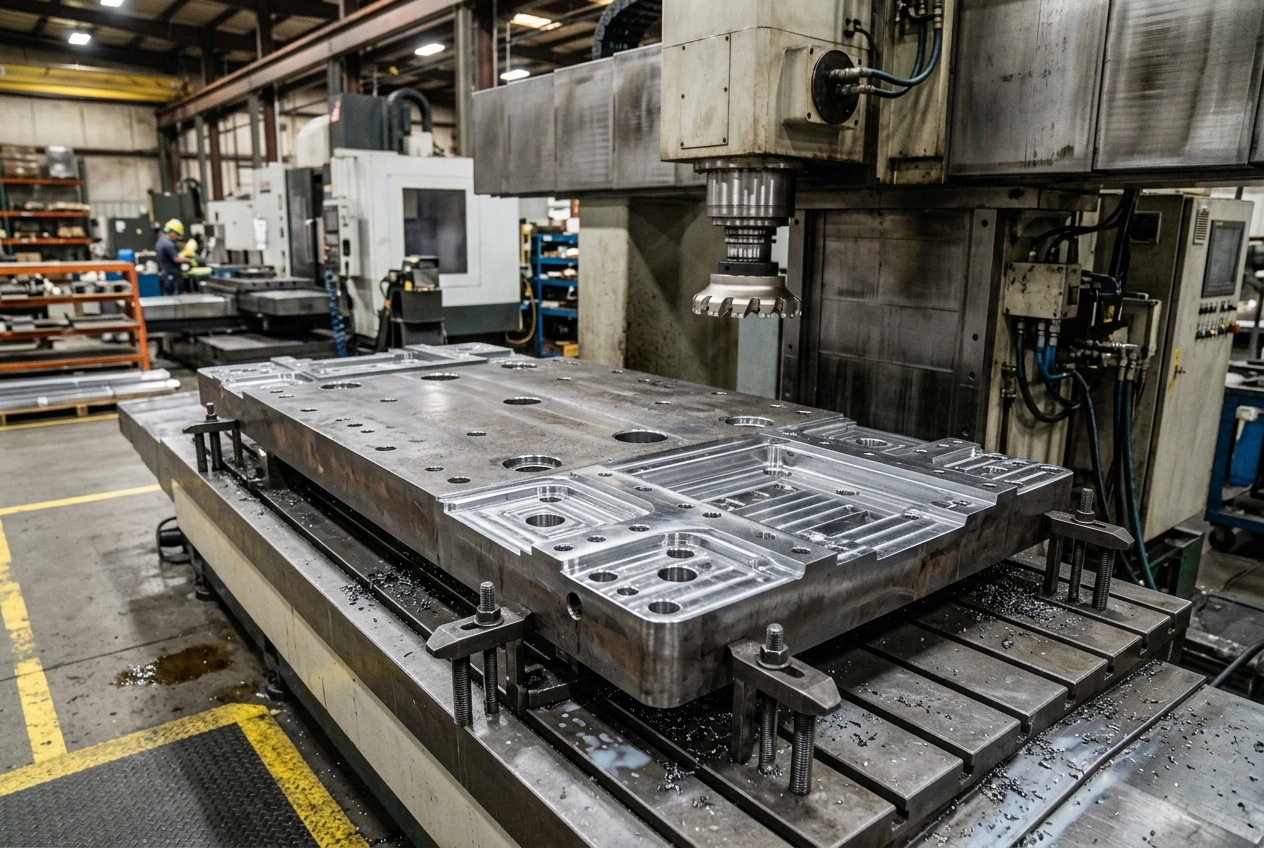
Where Large-Format CNC Fabrication Is Typically Used
Typical programs include equipment frames, machine bases, structural plates, fixture bodies, and oversized housings for industrial systems. Many projects need both material removal and follow-on fit checks to ensure surfaces and hole patterns align in final assembly.
For mixed geometry projects, we pair this capability with milling, 5-axis machining, and surface finishing where required by drawing notes.
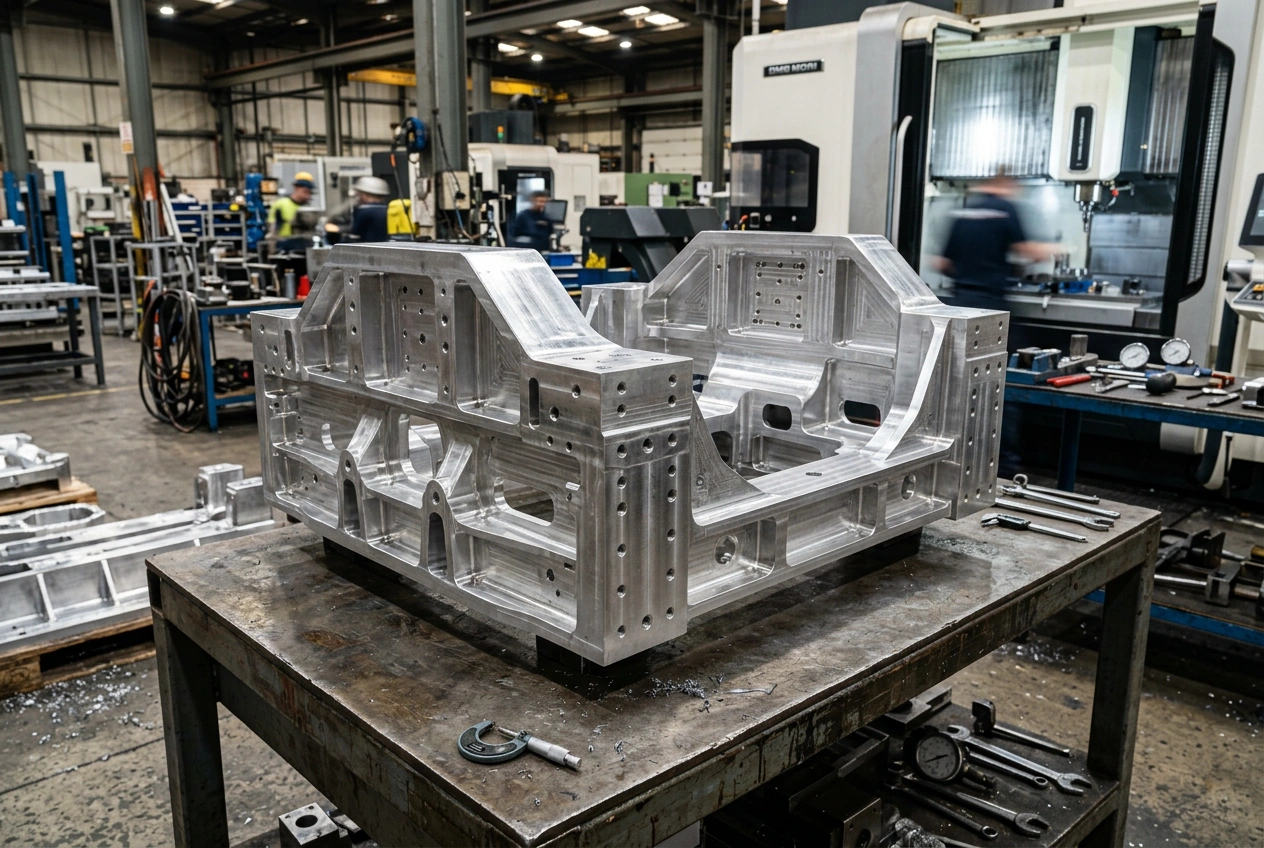
Staged Roughing, Controlled Finishing, Verified Datums
Large-part jobs usually run in stages: stock prep, rough removal, stress-balancing passes where needed, then finishing tied to critical datums. This helps limit distortion and preserves access to important features across setup changes.
Probe-assisted checks and planned re-referencing reduce coordinate drift between operations, especially on long feature chains.
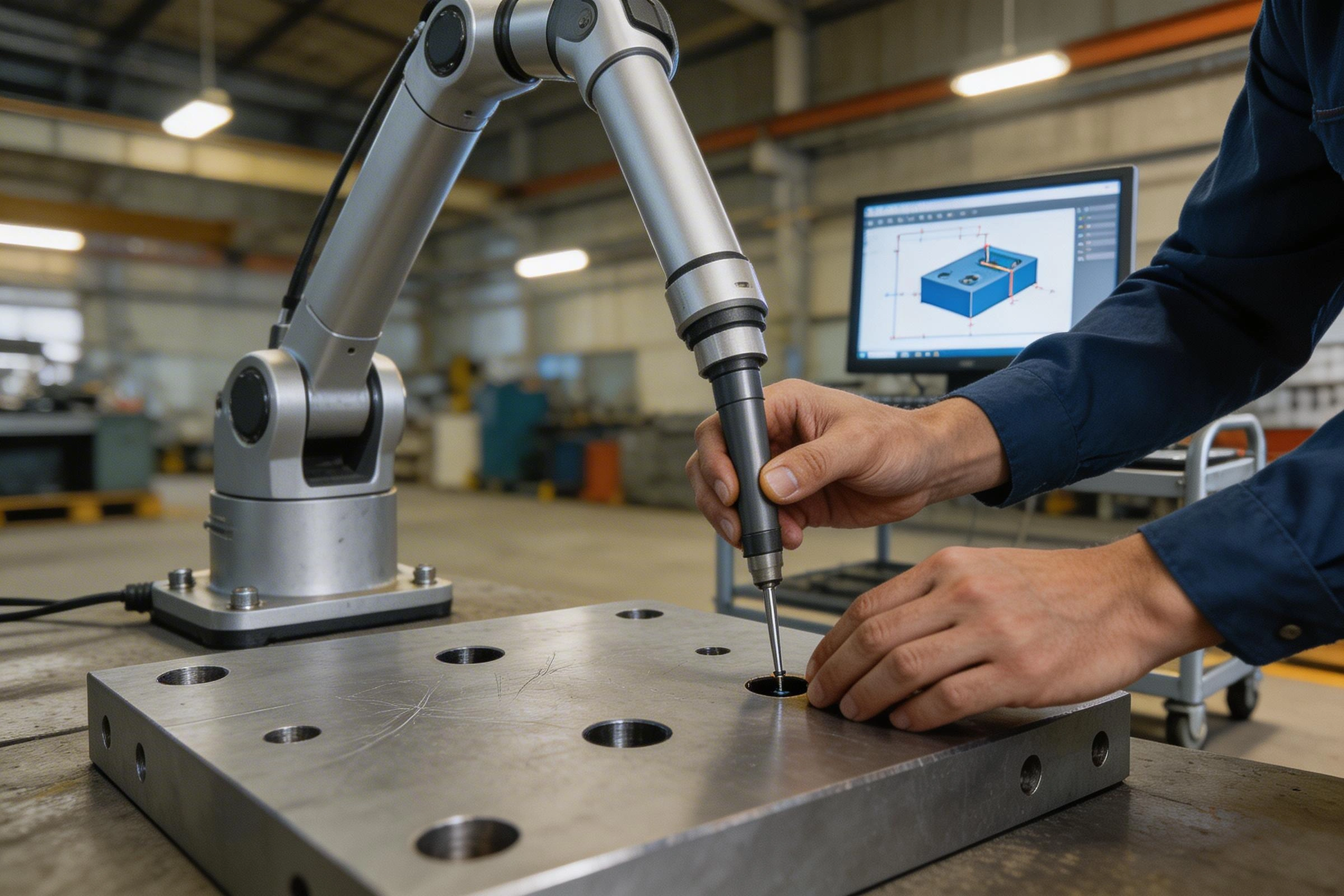
Inspection Approach for Oversized Feature Relationships
Our ISO 9001:2015 workflow applies first-article checks, in-process verification, and final dimensional control focused on the relationships that drive assembly success. Large-part inspection emphasizes datum consistency and feature-to-feature alignment over single-point spot checks.
Material documentation and reporting formats are available when required at order entry.
What to Share Early for Better Large-Part Outcomes
Large-component quotes improve when you include overall dimensions, estimated mass, lift constraints, stock assumptions, and critical fit interfaces. Early discussion on datum logic and tolerance zoning usually reduces rework risk and schedule surprises.
If the project starts as a pilot lot, we can stage it through prototyping or low-volume planning before broader release.
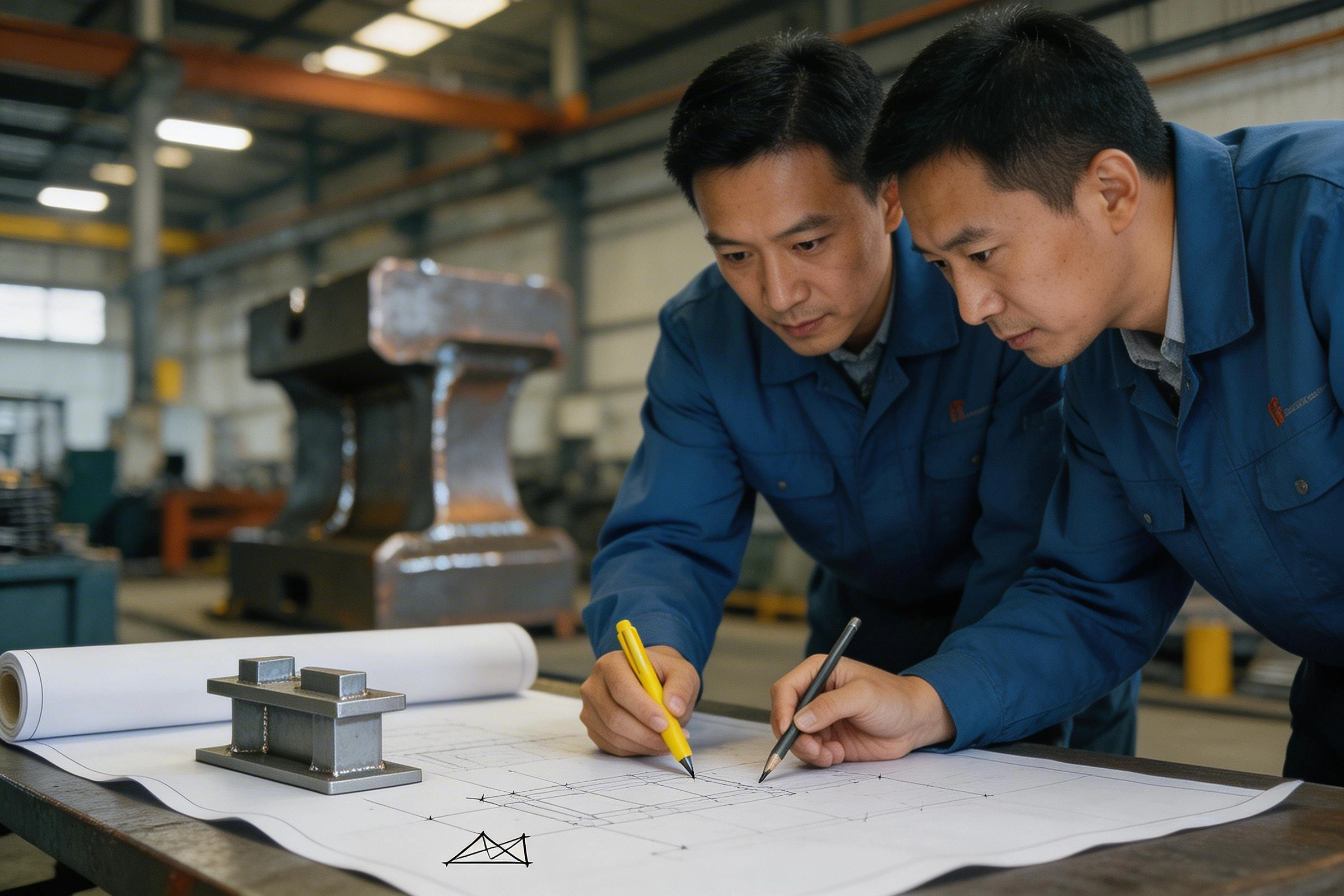
Large-Part Programs Need Control, Not Just Capacity
Oversized machining succeeds when setup logic, datum strategy, and verification stay synchronized from first cut to final inspection.
Datum-Centric Process Design
Reference strategy planned for multi-setup oversized components.
Heavy-Duty Milling Discipline
Roughing and finishing stages balanced for stability and accuracy.
Inspection That Matches Fit Risk
Critical relationships verified with repeatable methods.
Export-Ready Delivery
Packing and documentation for North America, Europe, and Australia.
Questions About Large CNC Machining in China
What qualifies as a large-part CNC machining project?
Large-part projects typically involve oversized workpieces where machine travel, fixture stability, and handling risk become primary constraints. Beyond raw dimensions, complexity and part mass also affect strategy, including how many setups are needed to hold datums across faces.
What is heavy-duty milling used for in large-format fabrication?
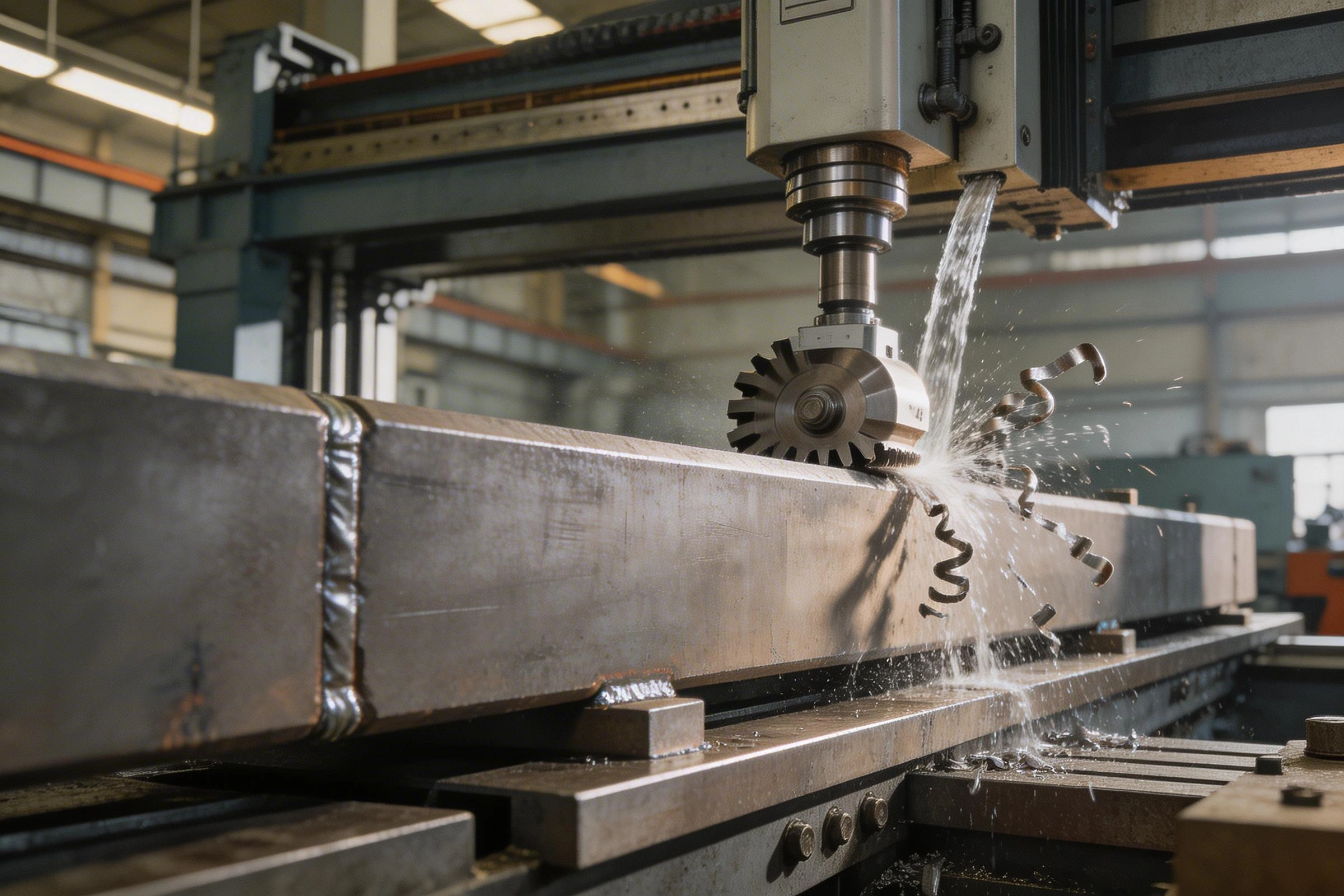
Heavy-duty milling removes stock from large frames, base plates, weldments, and structural components that need flatness, hole position control, and repeatable mating surfaces. It is often used for industrial equipment, automation structures, and fixture bodies where manual methods are too variable.
How do you maintain accuracy on oversized components?
Accuracy comes from staged roughing and finishing, rigid workholding, and a datum plan that survives multiple setups. We align probing and inspection to critical features so coordinate relationships remain controlled even when the part is too large for one simple orientation.
Which materials can you machine for large parts?
Common materials include aluminum, carbon and alloy steels, stainless steels, and selected engineering plastics where stiffness allows. Material choice affects tool pressure, thermal behavior, and inspection strategy, so BOM callouts should be confirmed before programming.
What tolerances are realistic for large CNC machined parts?
Tolerance capability depends on geometry, span length, and material behavior. Longer features and large flat surfaces usually need practical tolerance zoning rather than one global tight band. We quote critical dimensions based on access, setup count, and measurement method.
Do you support welded structures and secondary operations?
Yes, where scope requires it. Large programs often combine machining with weldment preparation, drilled/tapped patterns, and final-fit operations. Secondary steps are planned so post-machining changes do not compromise critical datums.
What should I send for a large-part machining quote?
Provide STEP, STP, IGES, or X_T models plus PDF or DWG drawings for GD&T and notes not fully modeled. Include overall dimensions, estimated weight, lifting constraints, material grade, quantity, and any inspection/reporting requirements.
How do lead time and cost scale with oversized jobs?
Large-part cost and schedule are driven by stock prep, machine occupancy, setup count, and inspection scope more than spindle time alone. Early DFM and datum planning usually reduce rework and shorten total cycle time.
Can large-part prototype work transition to repeat production?
Yes. Pilot builds can establish fixture logic, process controls, and inspection checkpoints that support later repeat orders. This approach lowers risk before committing to recurring production schedules.
Request a quote for oversized CNC components
Upload CAD and drawings for large-part machining. We return process assumptions, lead time, and inspection scope in writing.
Why buyers choose us
- 12–24h quote turnaroundPricing, lead time, and DFM feedback — fast.
- NDA-ready & confidentialYour CAD files and IP stay protected.
- ISO 9001:2015 certifiedDocumented inspection at every stage.
- No fixed MOQFrom single prototypes to full production runs.